Spanish Through Pretend Play and Imagination Games
By Lindsey Carleton, MA, CCC-SLP
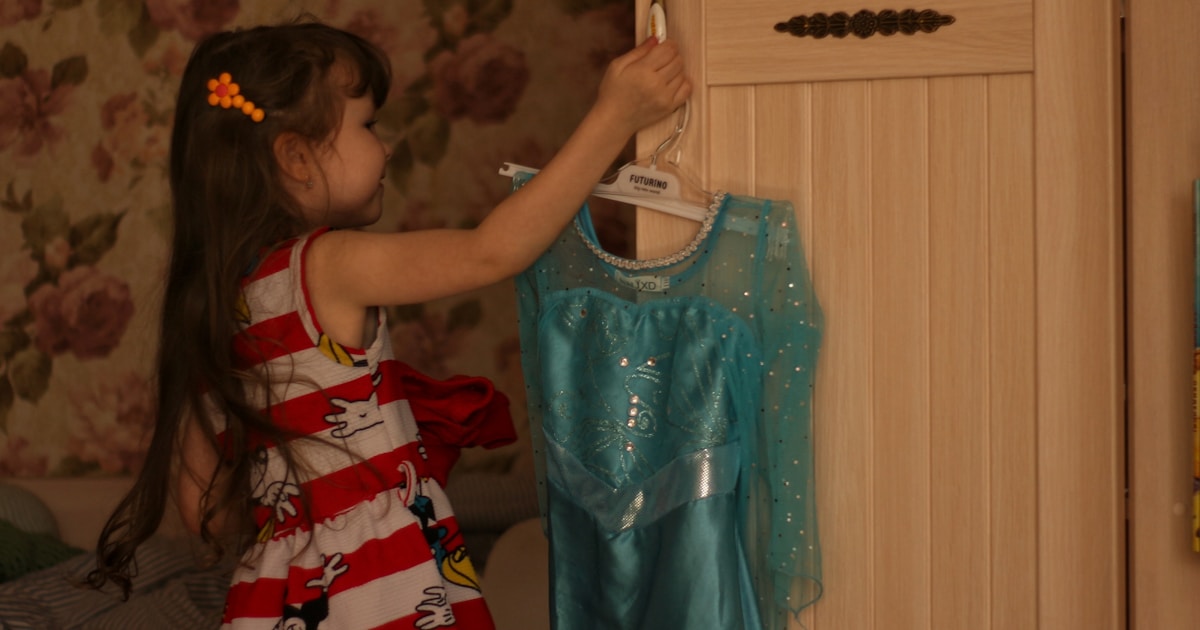
Your daughter wraps a blanket around her shoulders and announces, “Soy una doctora” (I’m a doctor). She picks up a stick as a stethoscope, points to her stuffed animal, and says, “Abre la boca. Tienes fiebre. Necesitas medicina” (Open your mouth. You have a fever. You need medicine). Without any instruction from you, she’s created an entire world where she’s narrating events, using past and future tense, and problem-solving in Spanish.
This is the magic moment that many bilingual families miss. They focus on building vocabulary in toddlers — colors, animals, body parts — and then wonder why their preschool-aged children still struggle to sustain conversation or express complex ideas in Spanish. The answer often lies in play.
By the time children reach age 3-4, they’re capable of symbolic and pretend play — creating imaginary scenarios, taking on roles, and narrating events that aren’t physically present. This shift opens a door to a completely different level of Spanish language development. Pretend play demands language that goes beyond the here-and-now: past events, future possibilities, hypotheticals, emotions, intentions, and narratives.
This post explores how to use pretend play and imagination to build advanced Spanish — not just vocabulary, but the complex language structures that reflect how bilingual minds actually work.
Why Pretend Play Is Advanced Language
It requires language to represent what isn’t visible. When your child is playing doctor, she’s not just saying words. She’s creating a scenario in her mind and using Spanish to describe events that aren’t happening in real time. This is conceptually advanced — it means she’s using Spanish to think, not just to label.
It integrates multiple verb tenses. “Soy una doctora” (present tense). “El paciente tuvo un accidente” (past — the patient had an accident). “Mañana va a estar mejor” (future — tomorrow he’ll be better). Real conversation requires mixing tenses, and pretend play naturally creates these opportunities.
It builds narrative skills. Stories have beginnings, middles, and ends. They have characters with motivations, conflicts, and resolutions. When your child creates and narrates a pretend scenario, she’s developing narrative skills — a fundamental component of bilingual literacy and academic language.
It’s intrinsically motivated and joyful. Your child isn’t practicing Spanish because you asked her to. She’s using Spanish because she’s absorbed in play and Spanish is the natural language for her world. That joy and motivation are powerful drivers of language development.
It builds the language of thinking and feeling. Pretend play creates space for emotions and internal states: “Tengo miedo” (I’m scared). “No quiero” (I don’t want to). “¿Me ayudas?” (Will you help me?). This is the social-emotional vocabulary that matters deeply for relationships and self-regulation.
Setting Up Pretend Play Spaces in Spanish
The spaces you create signal to your child: “Here, we use Spanish.” You don’t need elaborate props or special rooms. You need intentional setup and consistent language choices.
Dress-up and costume area: Collect simple items — doctor coat, chef hat, oversized glasses, scarves, hats. When your child reaches for a costume, that’s your cue to shift entirely into Spanish. “¿Qué vas a ser?” (What are you going to be?). “Ahora eres un/una doctora. ¿Qué hace un doctora?” (Now you’re a doctor. What does a doctor do?). Your Spanish narration while she’s engaged in costume play anchors the language in imaginative space.
Restaurant/café play: Set up a simple table with play plates, cups, and food (real or plastic). One of you is the customer, one is the waiter. The Spanish becomes practical and functional: “¿Qué quieres comer?” (What do you want to eat?). “Un sándwich, por favor. Y un vaso de agua” (A sandwich, please. And a glass of water). “Aquí está. ¿Te gusta?” (Here it is. Do you like it?). You’re building request language, polite forms, food vocabulary, and the entire social script of dining.
Doctor or veterinary clinic: This is children’s favorite role play because it involves problem-solving. Set up a “clinic” with stuffed animals as patients. You can be the patient or the doctor. Language becomes: “¿Qué te duele?” (What hurts?). “Me duele la cabeza” (My head hurts). “Necesitas descansar y tomar medicina” (You need rest and medicine). “¿Vuelvo mañana?” (Do I come back tomorrow?).
Store or shop: Play grocery shopping, toy store, or clothing store. Again, the language is practical and repeatable: “Buenas noches. ¿Qué necesitas?” (Hello. What do you need?). “Quiero manzanas” (I want apples). “¿Cuántas?” (How many?). “Tres, por favor” (Three, please). You’re building commerce language, numbers, manners, and negotiation.
Small world play: Use small figurines (animals, dinosaurs, dolls, cars) to create a miniature world. Your child narrates what’s happening: “El dinosaurio está comiendo. Corre muy rápido. Ahora está durmiendo en la cueva” (The dinosaur is eating. He’s running very fast. Now he’s sleeping in the cave). You might add: “¿Dónde va mañana?” (Where will he go tomorrow?). She extends: “Mañana va al río a beber agua” (Tomorrow he goes to the river to drink water). The language is purely narrative, and because she’s creating the story, she’s intrinsically engaged.
Puppet Play: The Shy Child’s Ticket to Language
Some children are hesitant to speak or perform as themselves but will talk through puppets or stuffed animals. Puppet play removes the self-consciousness.
Make it simple: You don’t need elaborate puppets. Stuffed animals, sock puppets, or even action figures work beautifully. Give each a distinct voice and personality.
Create relationships: Two puppets can be friends, family members, rivals, or strangers meeting for the first time. Set up scenarios: “The bear is sad. The rabbit wants to know why. What does the rabbit say?”
Stay in Spanish: Both puppets speak only Spanish. Your child narrates and responds in Spanish to keep the conversation going. “El osito está llorando. ¿Por qué, osito?” (The little bear is crying. Why, little bear?). She becomes the bear’s voice: “Porque perdí mi miel” (Because I lost my honey).
Don’t correct, expand: If your child says, “El oso perdió miel,” you might say back as your puppet, “Sí, el osito perdió su miel favorita. ¿Dónde buscamos la miel?” (Yes, the little bear lost his favorite honey. Where should we search for the honey?). You’re not correcting grammar, you’re expanding and extending the conversation.
Let her lead: Your job is to respond, ask follow-up questions, and keep the scenario interesting. Your child is the creative director. “¿Y después qué pasa?” (And then what happens?). Let her surprise you.
Building Narrative Complexity Over Time
Pretend play becomes more sophisticated as your child grows. Your job is to gently stretch her language without pushing.
Around 2-3 years: Simple role play with repeated scripts. “La mamá da de comer al bebé. El bebé come. Ahora el bebé duerme” (Mom feeds the baby. The baby eats. Now the baby sleeps). Language is present tense, simple actions.
Around 3-4 years: More complex scenarios with problem-solving. “El doctora ayuda al paciente. El paciente estaba enfermo, pero ahora se siente mejor. Mañana va a poder jugar” (The doctor helps the patient. The patient was sick, but now he feels better. Tomorrow he’ll be able to play). You hear past tense, emotions, and future possibilities emerging.
Around 4-5 years: Elaborate narratives with multiple characters, conflicts, and resolutions. “Érase una vez dos niños. Querían ir al parque, pero llovía. Decidieron jugar adentro. Jugaron a los videojuegos. Fue muy divertido. Después dejó de llover y salieron a jugar afuera también” (Once upon a time there were two kids. They wanted to go to the park, but it was raining. They decided to play inside. They played video games. It was very fun. Later it stopped raining and they went outside to play too). Now you hear complex sentences, conditional language, and narrative arc.
Role Play Scenarios and Starter Scripts
If your child is hesitant to initiate pretend play, you can offer scenarios with simple starter scripts.
Restaurant: You: “¿Quieres jugar a un restaurante?” (Do you want to play restaurant?). You sit at a table. She becomes the waiter: “Buenas noches. ¿Qué quieres comer?” (Good evening. What do you want to eat?). You: “Un sándwich, por favor. ¿Qué tienes para beber?” (A sandwich, please. What do you have to drink?).
Grocery Store: You: “Necesito ir al supermercado. ¿Me acompañas?” (I need to go to the supermarket. Will you come with me?). You hold her hand (or a puppet’s hand) and walk around. She points: “Mira, manzanas.” You: “¿Las quiero? ¿Cuántas?” (Do I want them? How many?). She: “Dos, por favor” (Two, please).
Doctor: You lie down or sit and pretend to be sick. “Doctora, no me siento bien. Tengo dolor de garganta” (Doctor, I don’t feel well. I have a sore throat). She examines you: “Abre la boca. Tienes inflamación. Necesitas tomar medicina. Aquí está” (Open your mouth. You have inflammation. You need to take medicine. Here it is).
School: “El maestro llegó. ¿Qué hacen los niños en la escuela?” (The teacher arrived. What do the kids do at school?). Let her be the teacher or a student and narrate the day: “Cantamos una canción. Jugamos. Comemos merienda. Después salimos al patio” (We sing a song. We play. We eat snack. Then we go outside).
Your Role: Facilitator, Not Director
The most common mistake parents make with pretend play is over-controlling it. You ask too many questions, correct too much, or impose your own storyline on your child’s play.
Your actual job is to:
-
Be present and interested. Watch, laugh, notice what your child is doing. Your attention signals that her play matters.
-
Respond in Spanish when she speaks. Don’t ask her to repeat or correct her grammar. Just respond naturally and keep the story moving.
-
Ask open-ended questions that extend play. “¿Y después qué?” (And then what?). “¿Por qué?” (Why?). “¿Cómo se siente?” (How does she feel?). These questions don’t have right answers — they invite her to create.
-
Occasionally join in. Sometimes play alongside her, taking a role but following her lead. You’re not performing; you’re participating.
-
Accept silence and observation. Some children need to watch pretend play before they join. That’s fine. She’s learning the patterns.
Play as Foundation for Academic Spanish
Pretend play isn’t just fun — it’s the foundation for academic language. Children who engage in rich imaginative play develop stronger narrative skills, more complex vocabulary, and better ability to think abstractly. These are precisely the skills that transfer to reading, writing, and classroom success in Spanish.
If you’re raising a child who will eventually attend Spanish immersion preschool or Spanish-language school, the pretend play skills she develops now — the ability to narrate, to use past and future tense, to discuss characters’ feelings and motivations — are what will support her academic bilingual development later.
Key Takeaway: Imagination Is the Gateway to Advanced Language
Most bilingual families excel at teaching vocabulary to toddlers but struggle to support the next level — conversation, narration, and complex thinking in Spanish. Pretend play is the bridge. It’s where language becomes a tool for imagination rather than just labeling. It’s where your child uses Spanish to create, problem-solve, and tell stories.
By setting up simple pretend play spaces, staying in Spanish while playing, and following your child’s lead, you’re inviting her to think and create in Spanish. Over weeks and months, she’ll develop not just more Spanish words, but the sophisticated language structures and narrative skills that characterize genuine bilingualism.
For detailed scripts, pretend play scenario ideas, and activities to support narrative development in Spanish at different ages, download our free bilingual resources guide. And for a complete year-long curriculum integrating pretend play, puppet activities, and storytelling into your bilingual home, the **Palabra Garden 12-Month Bilingual Curriculum**includes themed role play units, narrative frameworks, and conversation starters for toddlers through preschool.
Related reading: Outdoor and Nature Spanish — Building Vocabulary Through Play | Storytelling and Narrative Skills in Two Languages
Through my work as an SLP, I’ve seen how powerful early language, social-emotional development, and hands-on learning can be for toddlers and preschool-aged children. Palabra Garden brings those same principles into your home with bilingual activities, preschool curriculum ideas, and simple strategies that support growing minds.
I believe children learn best through connection, curiosity, and everyday moments of discovery.