Heritage Spanish: Keeping the Language Alive
By Lindsey Carleton, MA, CCC-SLP
Heritage Spanish for kids is one of the most precious — and most fragile — forms of bilingualism in the U.S. By the time most heritage Spanish-speaking children enter kindergarten, they’re losing their Spanish faster than they’re learning new English. By third grade, many can no longer hold a conversation with their grandmother. This is not inevitable. But it does require an active, family-wide plan.
I’m a bilingual SLP who learned Spanish in college and through my healthcare work — not a heritage speaker myself, but someone who has spent years supporting heritage families. Here’s the honest version of what works, what doesn’t, and where most families lose the thread.
What “heritage Spanish” means
A heritage language is the language spoken at home (or by extended family) that differs from the dominant language of the surrounding community. For a child growing up in an English-dominant U.S. environment whose parents or grandparents speak Spanish, Spanish is the heritage language.
The challenge: school, peers, media, and most institutional contexts push English. Without active effort, the home language gets squeezed out within a few years of starting school.
The shrinking heritage Spanish window
A typical pattern for U.S. heritage Spanish kids without active maintenance:
- Ages 0–4: Spanish-dominant or balanced at home
- Ages 4–6: Starting school, English rapidly catches up
- Ages 6–9: English becomes dominant; Spanish vocabulary plateau
- Ages 9–12: Receptive-only — understands Spanish, won’t speak it
- Adolescence: Significant attrition; may need to “relearn” Spanish in adulthood
This is the trajectory researchers call “subtractive bilingualism” — the dominant language replaces rather than adds to the heritage language. It happens to most families who don’t push back actively.
Why heritage Spanish is hard to maintain
A few structural reasons:
- School operates entirely in English for most U.S. kids
- Peer pressure drives kids to speak English at the playground
- Media is overwhelmingly English
- Grandparents may live far away — limiting natural Spanish exposure
- Bilingual parents themselves often code-switch heavily in mixed environments
- It’s just easier in the moment to switch to English when a child responds in English
These pressures compound. By age 7, even families committed to Spanish find it shrinking.
The five-pillar maintenance strategy
What I’ve seen actually work in heritage Spanish families:
Pillar 1: A Spanish-only zone in the home
Pick a context — meals, bedtime, weekends, or the car — and enforce Spanish-only there. Not the whole house. Just one context, sustained.
Pillar 2: Weekly contact with Spanish-speaking family
A phone call, a video chat, a Sunday visit. Same family member, same time slot, sustained for years. See long-distance bilingualism and when grandparents are your child’s main Spanish connection.
Pillar 3: Spanish-language reading
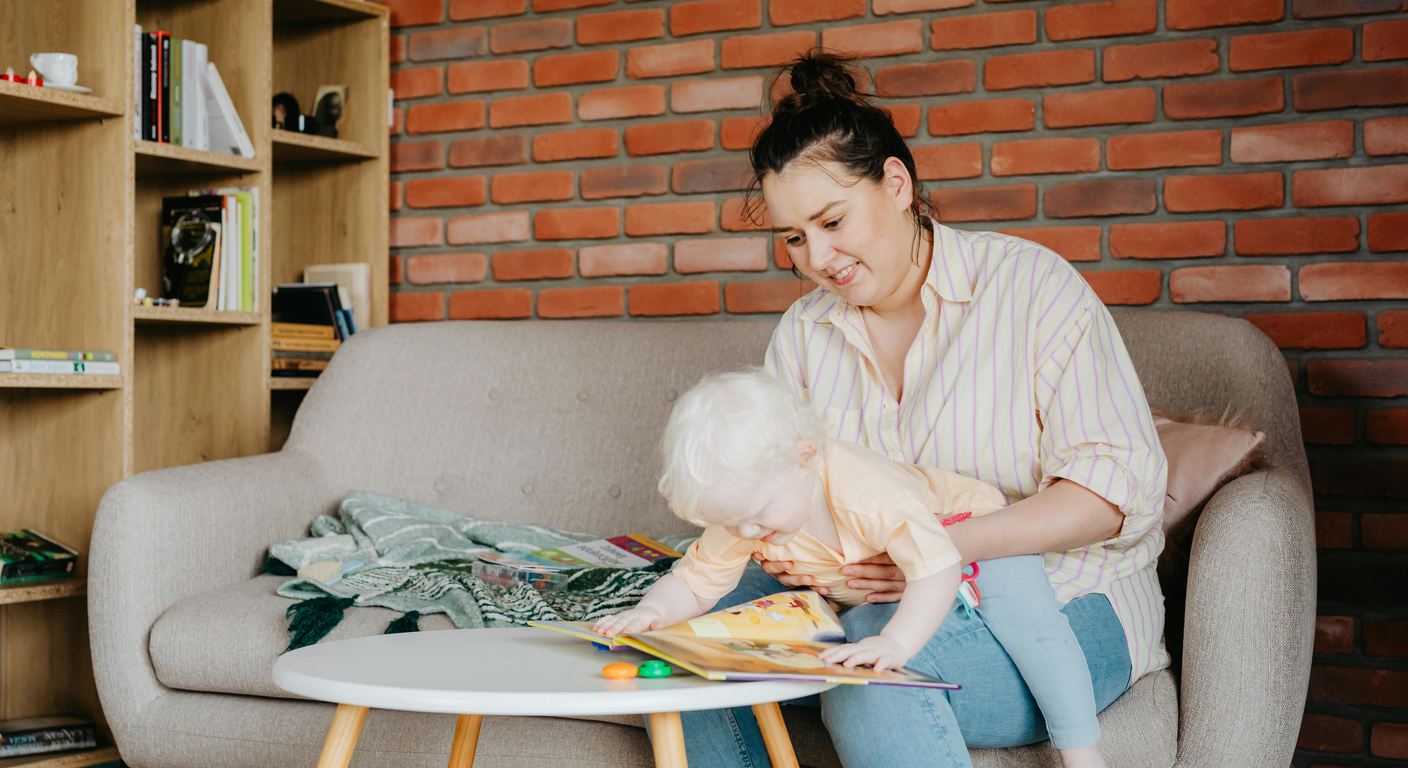
This is where many families slip. Reading in Spanish is what lifts a heritage speaker’s vocabulary above the everyday-conversation ceiling. See reading aloud in Spanish even if you’re not fluent.
Pillar 4: Connection to culture, not just language
Music, food, holidays, family stories. Kids who feel emotionally connected to their heritage culture maintain the language longer. See building Spanish pride.
Pillar 5: A formal Spanish learning component
Once kids hit school age, informal use at home isn’t enough. A bilingual school, a Saturday Spanish program, structured curriculum at home, or a tutor becomes important. See Spanish immersion preschool vs dual language.
The hardest age: 5–7
Most heritage Spanish loss accelerates between ages 5 and 7. Why:
- Kindergarten starts in English
- The child realizes peers speak English
- The child responds to parents’ Spanish in English (passive bilingualism begins)
- Parents, exhausted, let the responses pass
- Six months later, the child’s Spanish output has shrunk to near-zero
Breaking this cycle requires holding the line during the toughest stretch. The single most important intervention: don’t switch to English when your child responds in English. Repeat the question in Spanish, model the Spanish word, wait.
Need a structured plan to anchor heritage Spanish for kids ages 2–5? The Palabra Garden 12-month curriculum provides daily structured input that supplements the family’s informal use — keeping the language stronger going into the school years.
A real family routine
Here’s one heritage family’s actual weekly rhythm (anonymized):
- Daily: Spanish at breakfast, English at school, mixed at dinner, Spanish-only bedtime story
- Saturday morning: Video call with abuela in Mexico (45 minutes)
- Sunday afternoon: Bilingual library trip; pick three Spanish books for the week
- Quarterly: Visit Spanish-speaking aunts in the same city
- Annually: Two-week trip to Mexico in summer visiting family
- Continuous: Spanish music in the car; bilingual cards on the dinner table; one Spanish movie a month
Estimated Spanish input: about 2 hours a day on weekdays, 4–6 hours on weekends. Sustained for years. This family’s 8-year-old is fully bilingual.
What’s commonly tried and doesn’t work alone
- A single Spanish lesson a week with no home use — too thin
- Spanish-language TV without conversation — see does Spanish TV count as bilingual exposure
- An app subscription — see bilingual apps vs real-life practice
- A Spanish-speaking nanny replaced after a year by an English-speaking one
- “We’ll speak more Spanish when she’s older” — older never comes
Any one of these as a supplement is fine. As the primary strategy, none works.
Cultural connection as fuel
Language follows identity. Kids maintain heritage Spanish more reliably when:
- They feel proud of their heritage
- They have positive associations with Spanish-speaking family members
- They visit or call regularly
- They consume cultural content they enjoy (music, food, dance, sport, stories)
- They see Spanish as cool, not embarrassing
The hardest age for cultural shame is roughly 8–12 — when peer perception starts to matter most. Building strong cultural pride before then is crucial. See building Spanish pride.
What if you, the parent, don’t speak Spanish well anymore?
This is common — heritage speakers who lost some of their own Spanish growing up now want to raise bilingual kids. A few moves:
- Don’t apologize for imperfect Spanish — use what you have, model effort
- Lean on grandparents and other family members for richer input
- Use audio resources — the 12-month curriculum’s Pronunciation Companion points you to free ones like Forvo
- Consider relearning alongside your child (many parents say this is the unexpected gift)
- Join Spanish-speaking community groups even if you feel rusty
Your Spanish doesn’t have to be perfect for your child’s to be strong. What matters is sustained, daily, meaningful exposure across multiple sources.
The role of community
Solo families struggle more than community-embedded families. If possible:
- Find Spanish-speaking playgroups or storytimes
- Look for bilingual preschools or after-school programs
- Build friendships with other heritage families
- Visit Spanish-speaking neighborhoods periodically
- Attend cultural events (festivals, religious services, community gatherings)
This is less about formal instruction and more about Spanish being part of the child’s social, not just family, world.
A note on dialect
Heritage Spanish is often a specific dialect (Mexican, Cuban, Puerto Rican, Salvadoran, etc.) that may differ from the “neutral” Spanish in textbooks. That’s fine. Your family’s dialect is the right Spanish for your child. Don’t let a school or app’s neutral Spanish make you feel your version is less valid.
See regional Spanish variations.
A free starting point
The Palabra Garden freebie gives you a printable starting resource without any commitment. Use it alongside the family-and-culture pillars above to anchor week one.
Frequently asked questions
My child responds to me in English when I speak Spanish. What do I do?
The most common scenario in heritage families. Don’t switch to English. Repeat your question in Spanish, model the Spanish answer, wait. Be calm and patient — this can take months to shift back. Skipping over the English response and continuing in Spanish is the move.
Should I correct my child’s “broken” Spanish?
Gentle modeling beats correction. If your child says “Yo no sabo” (instead of “Yo no sé”), respond with the correct form naturally (“Ah, tú no sabes?”) rather than calling out the mistake. Heritage Spanish is often slightly different from textbook Spanish, and that’s okay — but obvious errors are worth modeling correctly.
Is heritage Spanish “real” Spanish?
Yes. It may differ from textbook Spanish in some ways — vocabulary, grammar, accent — but it’s a fully valid form of the language. Don’t let anyone (including school staff) treat your family’s Spanish as inferior.
What about kids who refuse to speak Spanish entirely?
Common, especially in middle childhood. Don’t punish. Keep speaking Spanish to them, keep providing input, give them time. Many “refusers” pick it back up in adolescence or young adulthood when identity matters more. See when your child refuses to speak Spanish.
Is bilingual school enough?
For some families, yes. For others, school provides input but doesn’t replace home use. The best outcomes come from school + home + family combined.
What if grandparents pass away — can heritage Spanish survive?
Yes, but it’s harder. Other family connections, cultural community, formal Spanish learning, and travel become more important. Many families I’ve worked with maintain heritage Spanish across generations through community and structured learning even after the primary Spanish-speaking grandparent is gone.