Spanish Vocabulary for Back-to-School (35 Words for Preschoolers)
By Lindsey Carleton, MA, CCC-SLP
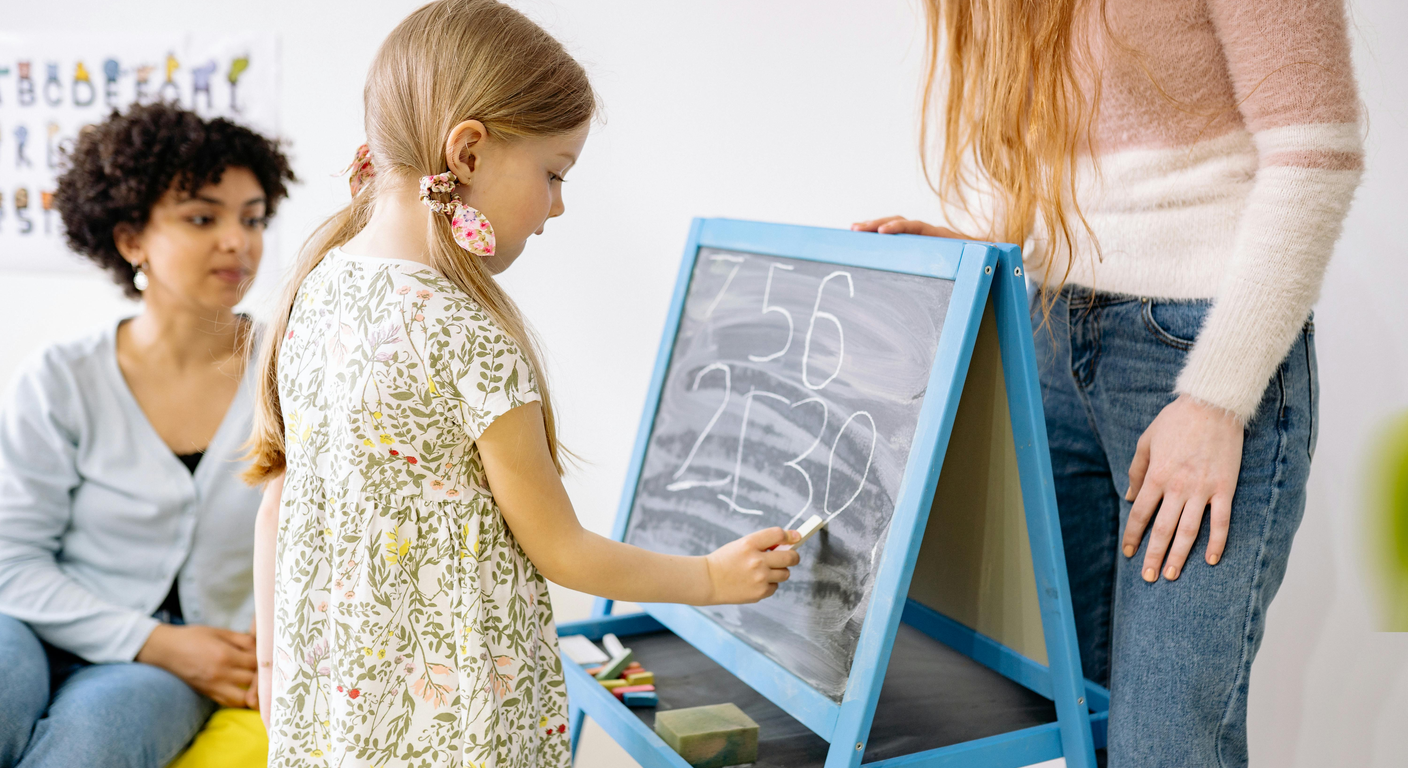
Back-to-school week is one of the highest-leverage moments to introduce Spanish vocabulary, because everything in a preschooler’s life is suddenly new — new building, new teacher, new backpack, new lunchbox, new routines. New things invite new names. Their brains are wide open for fresh labels in a way they aren’t during ordinary weeks.
But you don’t want to fire-hose a 3-year-old with thirty-five Spanish words in three days. Here is the list, organized by category, with the rhythm I’d use to introduce them across the first month of school.
The 35 words by category
Backpack and supplies (8 words)
| English | Spanish | Pronunciation hint |
|---|---|---|
| backpack | mochila | mo-CHEE-la |
| lunchbox | lonchera | lon-CHEH-ra |
| water bottle | botella de agua | bo-TEH-ya day AH-gwa |
| crayon | crayón | cra-YOHN |
| pencil | lápiz | LAH-peess |
| paper | papel | pa-PEHL |
| book | libro | LEE-bro |
| glue stick | barra de pegamento | BAH-ra day peh-ga-MEN-toh |
Clothing for school (7 words)
| English | Spanish | Pronunciation hint |
|---|---|---|
| shoes | zapatos | sa-PAH-tos |
| sneakers | tenis | TEH-nees |
| jacket | chaqueta | cha-KEH-ta |
| shirt | camisa | ca-MEE-sa |
| pants | pantalones | pan-ta-LOH-nehs |
| socks | calcetines | cal-seh-TEE-nehs |
| hat | sombrero / gorra | som-BREH-ro / GO-ra |
People at school (6 words)
| English | Spanish | Pronunciation hint |
|---|---|---|
| teacher | maestra / maestro | ma-EHS-tra / ma-EHS-tro |
| friend | amigo / amiga | a-MEE-go / a-MEE-ga |
| classmate | compañero | com-pa-NYEH-ro |
| principal | director / directora | dee-rec-TOR / dee-rec-TOH-ra |
| nurse | enfermera | en-fer-MEH-ra |
| helper | ayudante | a-yoo-DAN-teh |
Daily routine actions (8 words)
| English | Spanish | Pronunciation hint |
|---|---|---|
| good morning | buenos días | BWEH-nos DEE-as |
| see you later | hasta luego | AH-sta LWEH-go |
| please | por favor | por fa-VOR |
| thank you | gracias | GRAH-syas |
| sit down | siéntate | SYEHN-ta-teh |
| line up | en fila | en FEE-la |
| share | compartir | com-par-TEER |
| wash hands | lavarse las manos | la-VAR-seh las MAH-nos |
Feelings about school (6 words)
| English | Spanish | Pronunciation hint |
|---|---|---|
| happy | feliz / contento | feh-LEES / con-TEHN-to |
| scared | asustado | a-soos-TAH-do |
| tired | cansado | can-SAH-do |
| excited | emocionado | eh-mo-syoh-NAH-do |
| miss you | te extraño | teh ex-TRAH-nyo |
| love you | te quiero | teh KYEH-ro |
The four-week rollout
Don’t introduce all 35 words in the first week. The science of toddler vocabulary acquisition shows that 6–10 new words per week, each repeated across multiple real-life moments, is the sweet spot. Here is how to pace it.
Week 1: Backpack and supplies (focus on 5 words, not 8)
Pick five of the eight. Mochila, lonchera, libro, crayón, lápiz. Use them every single day at drop-off, dinner, and bath. “Where is your mochila? Let’s pack your mochila.” That’s the rhythm.
Don’t add more vocabulary. Repetition matters more than introduction at this stage.
Week 2: Clothing for school (focus on 5 words)
Layer in zapatos, chaqueta, calcetines, camisa, sombrero. Pair them with the morning getting-dressed routine. By the end of the week, your toddler will hear “Where are your zapatos?” dozens of times.
Keep using last week’s words. Don’t drop them.
Week 3: People and daily actions (focus on 8 words)
Now bring in maestra, amigo, buenos días, hasta luego, por favor, gracias, siéntate, lavarse las manos. These are the social-fabric words that get used at school AND at home, every day. By the end of this week your child has 18 Spanish school words in active rotation.
Week 4: Feelings (focus on 4–6 words)
The last batch is the most emotionally important. Once you’ve named feliz, cansado, asustado, te extraño, your toddler has Spanish access to the inside of their head — a huge bilingual milestone. Add these gently and at moments of real feeling. “You look cansado after school today.”
By Week 4 you’re cycling 25–30 active words. The remaining handful — botella, papel, pegamento, enfermera, ayudante, en fila, compartir, te quiero, contento, emocionado — get introduced naturally as the situations come up.
How to introduce a new word so it sticks
The mistake most parents make at this stage is quizzing the child. Don’t do this. Toddlers learn vocabulary from exposure in context, not from being asked to perform.
The pattern that actually works:
- Name it in Spanish first. Then in English. “Mochila. That’s your mochila. Mochila is the Spanish word for backpack.”
- Use it immediately. “Let’s get your mochila ready.”
- Use it again within five minutes. “Where is the mochila now? Mochila is in the car.”
- Repeat it tomorrow, and the day after. Daily repetition beats single-day intensity by an order of magnitude.
Do not ask “Can you say mochila?” The pressure backfires. Let them say it when they’re ready. Their first attempt might be moh-CHEE or meela — celebrate that, then continue using the full word in the next sentence.
For the full developmental picture of how toddler bilingual vocabulary grows, see our bilingual toddler milestones post.
What to do at drop-off
The drop-off moment is a vocabulary goldmine. Use the same three phrases every single day, in the same order. After two weeks of consistency, your child will be saying them with you.
“Buenos días, mi amor. Te quiero. Hasta luego.”
“Good morning, my love. I love you. See you later.”
If you want a deeper guide for this exact moment, see our Spanish drop-off and pick-up post (coming this week).
A note for parents who don’t speak Spanish
You can teach every word on this list without being fluent. Use the pronunciation hints. Record yourself once so you can hear the cadence. Don’t worry about perfect intonation — your child’s ear will pick up the patterns from native-speaker audio elsewhere (songs, videos, classmates, family). Your job is consistency and exposure.
If you’d rather have all of this done for you — sequenced, scripted, paced — the 12-month Palabra Garden curriculum covers back-to-school in the September block with an SLP-written Pronunciation Companion, printable cards, and parent guides.
Frequently asked questions
My toddler is 2 — is 35 words too many?
Yes, for a 2-year-old in their first weeks of preschool. Cut the list in half and stretch it across two months instead of one. Use the most-repeated words first: mochila, lonchera, buenos días, hasta luego, gracias. The rest can wait for spring.
What if my child mixes English and Spanish words in a sentence?
That’s code-switching, and it’s a sign of healthy bilingual development — not confusion. See our code-switching post for the full picture. Your child saying “I want my mochila” is using two grammar systems at the same time and picking the most-available word for each concept. That’s sophisticated, not delayed.
Should I tell the teacher we’re working on these words?
Yes, briefly. A short note — “We’re introducing 5 Spanish words this week: mochila, lonchera, libro, crayón, lápiz” — lets the teacher reinforce them in passing if she wants to. Don’t expect anything more. Most monolingual teachers are happy to know but don’t have time to incorporate. See when your toddler’s teacher doesn’t speak Spanish (coming this week) for more on this.
My child knows some of these words in English already — do I “translate” or start fresh?
Build on what they know. If they know backpack, use “Look — mochila is the same as backpack.” If they don’t know the English yet, introduce both words side by side. Both routes work.
When will I see real progress?
In about 6 weeks of consistent daily use, you’ll start hearing your child use these words spontaneously. The first words to come back are usually the routine ones — gracias, por favor, hasta luego, buenos días. The visual ones (mochila, lonchera) follow within a couple more weeks.
If you want a sequenced year of bilingual learning that includes back-to-school vocabulary, see the 12-month curriculum. For free, start with our Spanish phrase cards.