Bilingual Identity for Toddlers Who Won't Remember Why
By Lindsey Carleton, MA, CCC-SLP
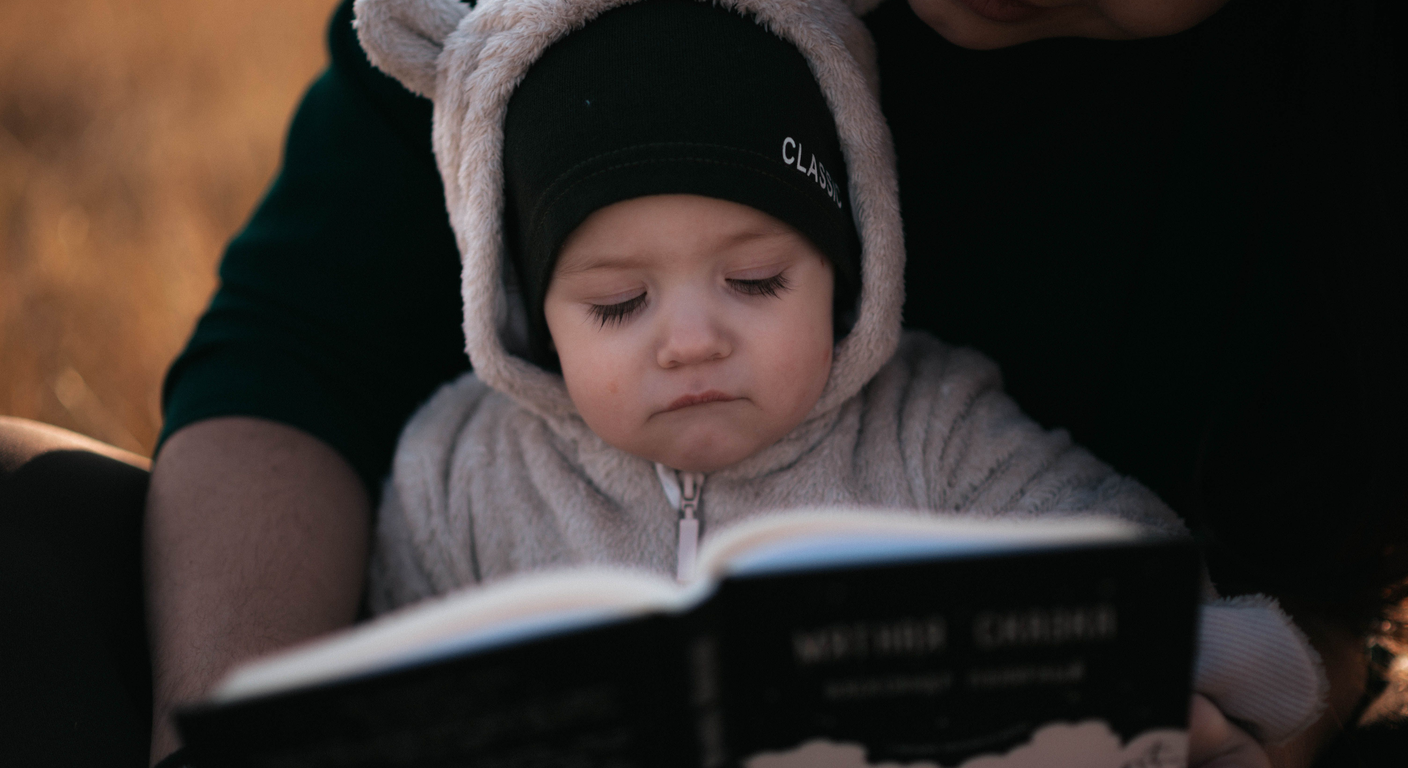
Here’s something most bilingual parenting articles won’t tell you: your toddler will not remember the years you’re putting in right now.
They won’t remember the first time you said abuela. They won’t remember the bedtime story you read in Spanish for the 47th time. They won’t remember the day you decided this — this commitment to a second language, this rearrangement of your whole household — was going to be a thing you did.
By the time they’re 12, they’ll know they’re bilingual. They won’t know how.
So why does it shape who they become?
What toddlers actually take from these years
The conventional answer is: neurological foundations. Bilingual brains develop differently. Critical-window stuff. Phonemic discrimination. All true. We’ve written about that here. But that’s the cognitive answer, and it’s the answer most articles stop at.
There’s a second answer that matters more for who your child becomes: the things they absorb without remembering are the things that feel like self, not like effort.
A child who grew up with two languages — even if they couldn’t tell you the story of how — develops a different relationship with language itself. They don’t experience Spanish as something added to them later. It feels like part of how the world works, and how their family works, from the inside. That’s identity, not skill.
This is the thing you can’t recover later. A 16-year-old who learns Spanish in high school can become fluent. They can become culturally connected. But Spanish will always sit slightly outside their identity — something they study, something they chose. Your toddler is acquiring it the other way: from the inside, before they can choose, in a way they’ll never quite have to think about.
The Hispanic Heritage Month version of this question
September 15 to October 15 is Hispanic Heritage Month in the U.S. Every year around now, parents — especially non-heritage parents like me — start asking some version of this question:
Am I doing this for them or for me?
It’s a fair question. And the honest answer is: both, and that’s okay. Bilingual education for toddlers is always partially a parent project. You’re choosing this. They’re not. The fact that they won’t remember the choosing means the origin of the bilingualism is you. That’s fine.
But for non-heritage families — families where Spanish isn’t your first language and you’re building it in deliberately — Heritage Month sometimes lands with a slightly uncomfortable question underneath: can my child have a bilingual identity without a heritage to anchor it to?
The short answer is yes. The longer answer is: their identity won’t look like a heritage-speaker’s identity. It’ll be its own thing.
What “bilingual identity” actually looks like at age 5
A 5-year-old who grew up in a non-heritage bilingual home (like the families Palabra Garden was built for) often shows their bilingual identity in three concrete ways:
1. They have a language for moments, not a language for situations. Spanish isn’t tied to a specific place (“home” vs. “school”) or a specific relative (“when I’m with abuela”). It’s tied to specific moments — the bedtime sequence, the cooking ritual, the silly song. They reach for Spanish when those moments arrive, regardless of who’s around. The language has temporal identity.
2. They use Spanish to mark intimacy and play. A lot of non-heritage bilingual kids end up using their second language as a secret-language with the parent who introduced it. “Hola, mi vida” lands harder when it’s the language Mom uses for the soft moments. The fact that the rest of the world doesn’t share this language gives it emotional weight that wouldn’t exist if Spanish were the household default.
3. They’re calmly aware that other kids don’t have this. Non-heritage bilingual 5-year-olds are usually not weird or self-conscious about being bilingual. They’re matter-of-fact: I know Spanish because my mom taught me. It’s just true. The fact that it’s true without any external pressure (no Latino family side, no expectation, no community context) gives it a quiet stability that’s actually really hard to disrupt later.
That’s a bilingual identity. It doesn’t require heritage. It requires sustained input during the years they won’t remember.
What this means for you right now
If you’re a non-heritage parent reading this during Hispanic Heritage Month and wondering whether you’re “allowed” to be doing this — yes. You’re not appropriating a culture by teaching your kid a language. You’re building a cognitive and emotional infrastructure in your kid that will become part of who they are.
You should know some things about Hispanic and Latino cultures. You should respect them. You should expose your child to Hispanic creators, books, music, food, holidays — not because you’re trying to be part of that culture, but because language without culture flattens into a vocabulary list. We have a reading list of bilingual books by Latino authors that’s a good starting point.
But you don’t owe anyone the cultural identity. You’re raising a bilingual American kid. That’s a real thing. It doesn’t require permission.
The thing about not remembering
There’s a particular grief that comes with realizing your toddler won’t remember the work you’re doing. Some days that thought hits hard. I’m putting in all this effort and they won’t know.
Here’s what I’d say about that, three years into this work as both an SLP and a parent:
The years your child won’t remember are the years that shape what they become. Other parents — the ones who didn’t choose this — are doing different things with these same years that they won’t remember either. Every family is investing in the slow, untraceable work of who their kid will be at 25.
You’re choosing Spanish. You’re choosing two languages instead of one. You’re choosing for the capacity and the identity and the connection even though there’s no way for the toddler in front of you right now to thank you for any of it.
They won’t thank you. But at 12, they’ll have a brain that processes language differently. At 18, they’ll have a relationship with their grandmother that wouldn’t have existed. At 25, they’ll move through the world with two cultures available to them. At 40, they’ll teach their own kids the songs you taught them.
You’re not doing this for the toddler in front of you. You’re doing it for everyone that toddler becomes later.
That’s the whole game.
If you’re working through what bilingual identity looks like in your specific family — heritage or non-heritage — and you want a structured plan that respects both sides of the equation, the Palabra Garden 12-Month Bilingual Curriculum is built by an SLP who’s not a heritage speaker herself. Every week is scripted; every cultural moment is contextualized. It’s one purchase for the full year.
Heritage Month is one month. The identity work is twelve.
— Lindsey