Code Switching in Bilingual Toddlers: Is It Normal?
By Lindsey Carleton, MA, CCC-SLP
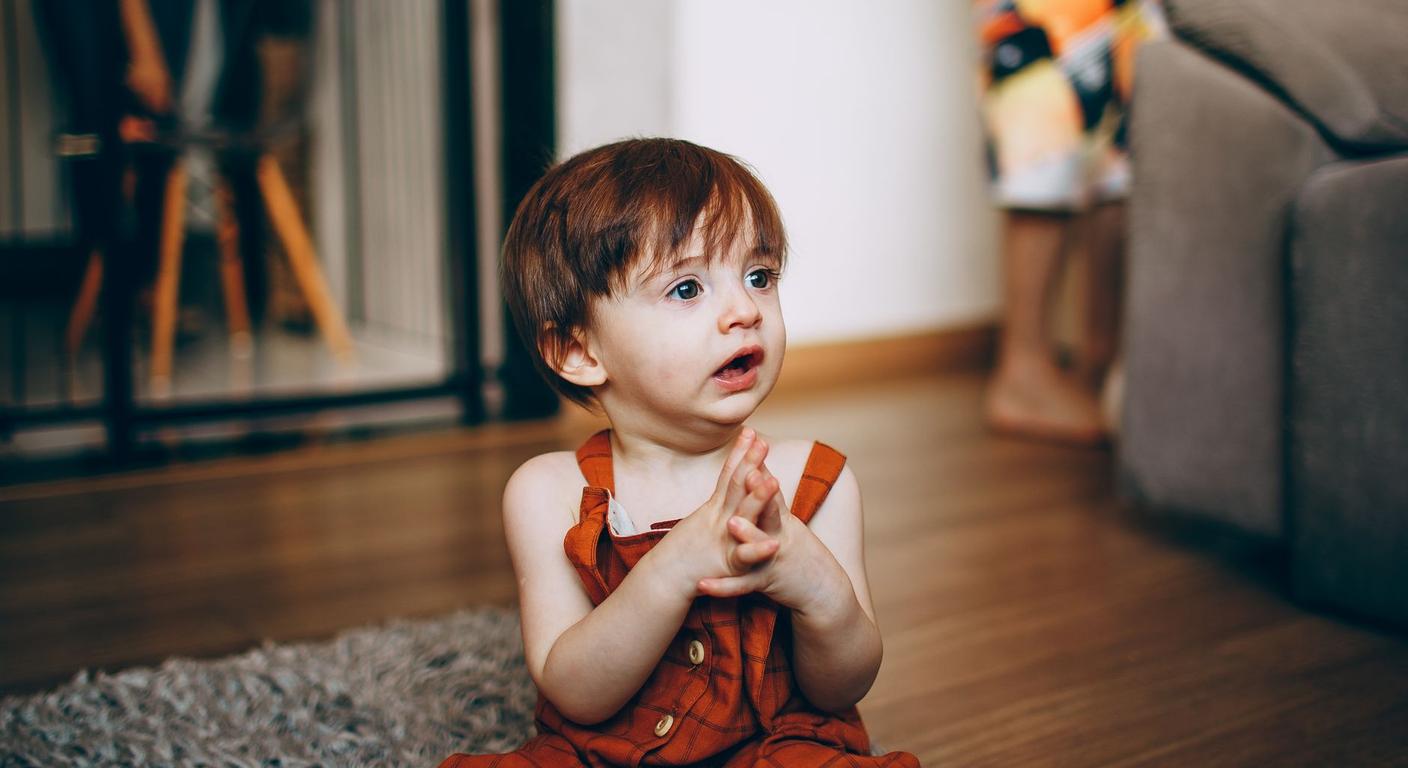
A code switching bilingual toddler is not confused. She’s doing some of the most sophisticated linguistic work a brain can do. When your 3-year-old says “Quiero un cookie,” she’s accessing two grammar systems, picking the word that’s most available, and stitching them together in real time. That’s a feature of bilingual development, not a bug.
This is one of the most misunderstood behaviors in bilingual childhood, and I want to clear it up — because I’ve watched too many families panic and quit Spanish when they shouldn’t have.
What code-switching actually is
Code-switching is alternating between two (or more) languages within a conversation, sentence, or even a single word. It happens for predictable reasons:
- The word in one language is more accessible at that moment
- The concept is more precisely expressed in one language
- The listener is known to be bilingual
- A topic is associated with one language more than the other
Adult bilingual speakers do this constantly. Researchers consider it a hallmark of bilingual fluency, not deficiency.
Why your toddler does it
A few specific drivers in young kids:
- Word availability — they grab the word they remember first
- Vocabulary gaps — they don’t know a word in one language yet
- Mirror effect — they hear adults code-switch and copy
- Identity signaling — they know which parent speaks which language
- Pure language play — they’re enjoying the words
None of these signals confusion. They signal active processing.
A common example
A real exchange from a family I worked with:
- Parent (Spanish): “¿Qué quieres comer?”
- Child (3yo): “Quiero pasta con tomato.”
- Parent: “¿Con qué?”
- Child: “Con salsa.”
The child knew salsa but reached for tomato first because she’d just seen one labeled in English. When prompted, she easily switched. That’s not confusion — that’s word retrieval doing its job under speed pressure.
What the research says
A few well-established findings:
- Code-switching in young bilingual children follows grammatical rules from both languages — not random insertion
- Children who code-switch tend to show stronger metalinguistic awareness (understanding how language works)
- The age at which mixing decreases varies, but most kids develop more separated language use by ages 5–7 as their two vocabularies fill out
- Code-switching is a normal, rule-governed feature of bilingual development and is not a sign of delay
See why your bilingual child mixes English and Spanish and bilingual children myths debunked for deeper dives.
When mixing decreases
For most bilingual children, the proportion of code-switched utterances peaks between ages 2 and 4, then decreases as both vocabularies become more robust. By age 6, most bilingual children can produce extended monolingual stretches in either language and reserve code-switching for specific contexts.
Some kids continue code-switching into adolescence and adulthood, especially in highly bilingual communities where it’s the social norm. That’s also normal — it’s a feature of the community’s language use, not a problem.
How to respond when your child code-switches
The single most important advice: don’t correct it.
Saying “Don’t mix!” or “Speak only Spanish!” sends the message that bilingualism is wrong. It also reduces the joy of using both languages, which tends to backfire — kids start refusing the second language altogether.
Better responses
-
Model the full phrase in your target language without commenting on the mixing.
- Child: “Quiero un cookie.”
- You: “¿Una galleta? Aquí tienes una galleta.” (No correction; you just modeled “galleta.”)
-
Repeat back in both languages.
- Child: “Mira, the perro!”
- You: “Sí! El perro. Look at the dog!”
-
Ask a question that prompts more of one language.
- Child: “Quiero milk.”
- You: “¿Quieres leche? ¿Quieres leche fría o leche caliente?”
After a few months of this kind of modeling, children naturally produce more separated utterances on their own.
Want a curriculum that bakes this kind of responsive modeling into every lesson? The 12-month curriculum gives you the parent scripts so you’re not improvising responses to mixed sentences on a Tuesday morning.
What NOT to do
- Don’t shame or correct. Reduces the joy, increases resistance.
- Don’t insist on “Spanish only” responses. Forced monolingual responses from a bilingual toddler are stressful and counterproductive.
- Don’t compare to another bilingual child who “doesn’t mix as much” — variation is enormous.
- Don’t worry that mixing means delayed development. It doesn’t.
- Don’t ban one language at the dinner table. Encourage flexibility, not rules.
Special cases
A few situations where mixing might warrant slightly more attention (but rarely intervention):
After a major language environment change
A child who starts mixing more after switching preschools or after a long visit with monolingual relatives — totally normal recalibration, usually settles in 4–6 weeks.
Sudden disappearance of one language
If your child stops using one language almost entirely, that’s worth understanding (often a social pressure response — see when your child refuses to speak Spanish) but it’s not a developmental concern.
Mixing alongside other delays
If your child is also showing signs of speech or language delay (very limited vocabulary across both languages combined, no two-word combinations by 2.5), that’s a reason to evaluate — but the mixing itself is not the issue. See speech delay vs bilingual difference.
The grammar of code-switching
Even toddlers follow rules when code-switching. Some patterns:
- They tend to switch at phrase boundaries, not random word boundaries
- They preserve the grammar of the surrounding sentence
- They borrow nouns more than verbs (across many languages, not just Spanish/English)
- They rarely violate the rules of either language
Watch your child carefully and you’ll notice they almost never produce ungrammatical mixed sentences. The brain is sorting things in the background.
A table of common mixing patterns
| Pattern | Example | Meaning |
|---|---|---|
| Noun in opposite language | ”Quiero el truck” | Word more accessible in English |
| Verb keeps target language | ”Voy a play” | Spanish frame, English content |
| Calques (translated idiom) | “Lo agarré rolling” | Bilingual creativity |
| Tag switching | ”Es bonito, right?” | Conversational flexibility |
| Whole-clause switch | ”Mira lo que hice, look at this” | Topic shift |
Each of these is a documented bilingual pattern. None is a disorder.
How long does the mixing phase last?
Honest range: from age 2 to anywhere between 5 and 8. For most kids the proportion of mixed utterances drops noticeably between 4 and 6 as their vocabulary fills in. Some kids continue meaningful code-switching into adulthood — especially in highly bilingual communities where mixing is the cultural norm.
Don’t set a “no mixing by age X” goal. Let it resolve on its own.
When to seek bilingual SLP input
If your child also has:
- Very limited vocabulary across both languages combined (under 50 words at 24 months)
- No two-word phrases by 30 months
- Loss of previously known words
- Difficulty making themselves understood in either language
That warrants a bilingual SLP evaluation. The mixing itself isn’t the reason to seek help — but a delay in total bilingual ability is.
For more, see bilingual development for children with speech and language differences. Or grab our free printable starter to support healthy bilingual exposure at home.
What grandparents need to know
If grandparents are worried about mixing, here’s a one-paragraph script you can share:
“Mixing two languages — code-switching — is a sign of healthy bilingual development. Research shows it’s associated with stronger cognitive flexibility and language awareness. Most kids reduce mixing naturally between ages 5 and 7. Correcting or banning it actually hurts language development. Your grandkid is doing exactly what bilingual brains do.”
Frequently asked questions
Is code-switching a sign of confusion?
No. Decades of bilingualism research show code-switching is a normal feature of bilingual processing, not confusion. Children who mix languages also follow grammar rules from both — far from random.
Should I “ban” one language at certain times?
Not as a rule. Gentle modeling in your target language works better than bans. If a parent strictly uses one language (one-parent-one-language), that’s fine — but it should come from natural use, not strict enforcement.
My child mixes more in stressful moments. Why?
Word retrieval slows under stress, so the brain grabs whichever language has the word ready first. Adults do this too. Not a concern.
Will my child grow out of mixing?
The proportion of mixed utterances usually decreases between ages 4 and 7, but many bilingual people code-switch their whole lives — especially in bilingual communities. There’s nothing to “grow out of.”
Should I tell my pediatrician about the mixing?
You can mention it for context. If they treat it as a concern, share that ASHA treats code-switching as normal. See our resources page for more.
My older child stopped mixing but my toddler is mixing a lot. Should I worry?
Older child was younger when she had a smaller vocabulary in both languages; she filled in and stopped reaching for the wrong-language word. Your toddler is at the peak-mixing age (2–4). She’ll likely follow the same curve.