First Words in Spanish — What to Expect and How to Encourage Them
By Lindsey Carleton, MA, CCC-SLP
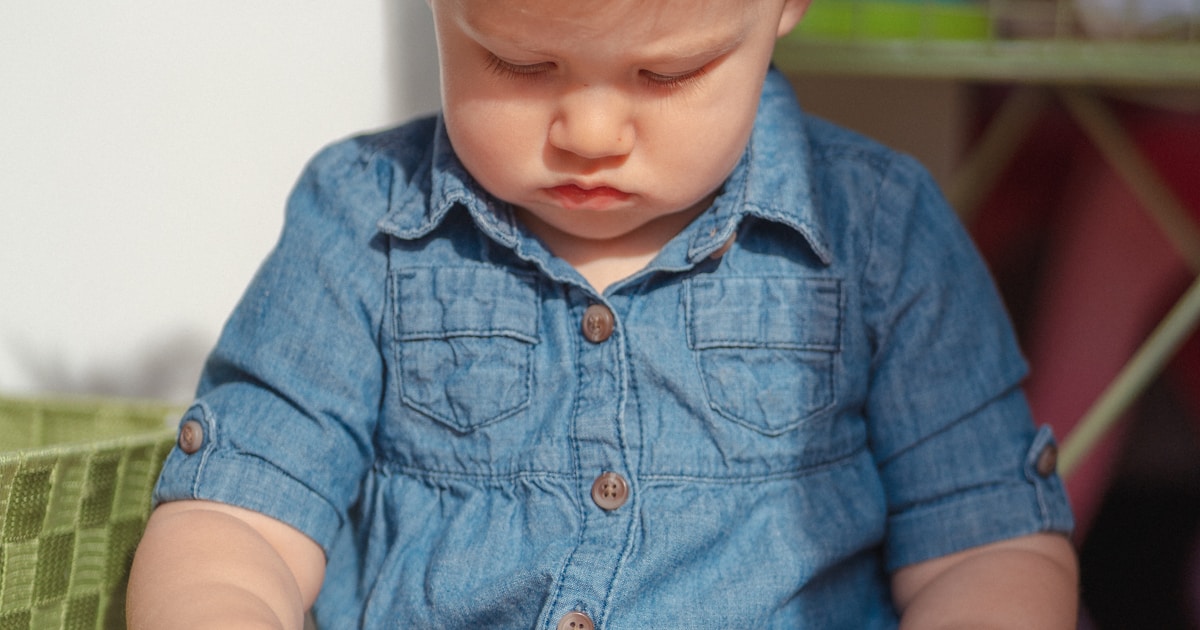
You’re sitting on the kitchen floor with your 14-month-old while she plays with measuring cups. Suddenly, clear as day, she looks up at you and says, “Agua.” Just one word. Just her voice saying the Spanish word for water. You freeze. Your heart does that thing where it swells and flutters at once. You immediately call your partner: “She said her first word! In Spanish!”
Then doubt creeps in. Is one word enough? Should she have more by now? And why is it Spanish when she hears English most of the day? Are bilingual babies slower to talk? Should you be worried?
The truth is more nuanced and reassuring than most parenting advice suggests. First words in bilingual children follow patterns that are different from monolingual children, but they’re not deficient or delayed — they’re simply bilingual. Understanding what to expect, and how to gently encourage Spanish speech without pressure, helps you celebrate those early words instead of second-guessing them.
When Bilingual Children Typically Say First Words
The typical age range for first words in any child is broad: anywhere from 8 months to 18 months is considered within normal limits. For bilingual children, the window is the same, but the pattern looks a little different.
Receptive language (understanding) typically comes first. By 12 months, most bilingual children understand 50 or more words across both languages combined. This understanding is real language knowledge — your child knows what “agua,” “más,” “mamá,” and “papa” mean, even if she hasn’t said them yet. This receptive foundation is exactly what early speech is built on.
First words usually arrive between 12 and 18 months. The exact timing varies widely and is influenced by personality (cautious children often wait longer), language exposure patterns, and individual neurological maturation.
The bilingual first word advantage: Research on bilingual development suggests that bilingual children’s total vocabulary is counted across both languages. So if your child says “agua” in Spanish and “dog” in English, that’s two words, not a fragmented or confused attempt at English. Those count as two legitimate first words in her bilingual system.
This is critical to understand: bilingual children aren’t learning one language — they’re building two. A monolingual 12-month-old with 50 words has all 50 in English. A bilingual 12-month-old with 50 words might have 30 in Spanish and 20 in English, or any other distribution depending on her exposure. Neither child is ahead or behind — they’re just organizing language differently.
What Bilingual First Words Look Like
They often span both languages. Many bilingual children’s first word repertoires include words from both languages. Your child might say “papá,” “agua,” “dog,” and “more” — a natural mix. This isn’t confusion. It’s efficient language use. She’s using whichever word comes to mind (or comes out easiest) to express her need.
They tend to be high-frequency, emotionally-charged words. First words are rarely abstract. They’re usually:
-
Names of people the child loves: “mamá,” “papá,” “Abuela”
-
High-frequency foods and drinks: “agua,” “pan,” “leche,” “más”
-
Routine words connected to daily life: “afuera” (outside), “perro” (dog), “noche” (night)
-
Words connected to motion or action the child enjoys: “arriba” (up), “brinca” (jump), “nada” (swim)
If your child’s first words are “agua,” “mamá,” and “perro,” that’s perfectly typical bilingual development. Abstract words like “happy” or “big” come much later.
They’re often easier in Spanish. Some children’s first words are more readily Spanish because the person who speaks Spanish most often (maybe a grandmother, a caregiver, or a bilingual parent) spends the most one-on-one time with them. Other children’s first words are primarily English because they spend more time in English-dominant environments. Neither pattern indicates a language preference or future language dominance — it’s often just about who talks to them most.
The Role of Comprehension Before Production
Here’s something that shifts a lot of parental anxiety: long before your child says her first word, she understands far more than she can produce. This gap between comprehension and production is normal and expected.
By 12 months, many bilingual children understand 50-100+ words across both languages. By 18 months, they might understand 150-300 words while only producing 10-50. That gap doesn’t mean anything is wrong. It means her brain is organizing language behind the scenes — listening, noticing patterns, building neural networks — before she commits to speaking.
This receptive foundation is actually an advantage. When bilingual children finally do start speaking, they often move quickly from 10 words to 50 words to 200 words, because all that comprehension work has already happened. The words have been in there, waiting for the motor control and neural circuits for speech production to catch up.
In my practice, I’ve seen children who didn’t say much until age 2 — but who understood Spanish and English fluently — suddenly burst into speech and catch up to their peers within weeks. The comprehension was there all along.
How to Encourage First Spanish Words (Without Pressure)
The most important principle: children learn to talk through meaningful interaction, not through correction or drilling. Here are strategies that actually work:
Use high-frequency phrases repetitively. The words children learn first are the ones they hear most often, in the same contexts, from the people they love. If you want to encourage Spanish first words, identify 5-10 key phrases and use them consistently, every single day:
-
“¿Quieres agua?” (Do you want water?) — during every snack and meal
-
“¿Dónde está mamá/papá?” — during greetings and playtime
-
“Mira, un perro.” (Look, a dog.) — whenever you see a dog
-
“¿Quieres más?” (Do you want more?) — during eating, music, swinging
-
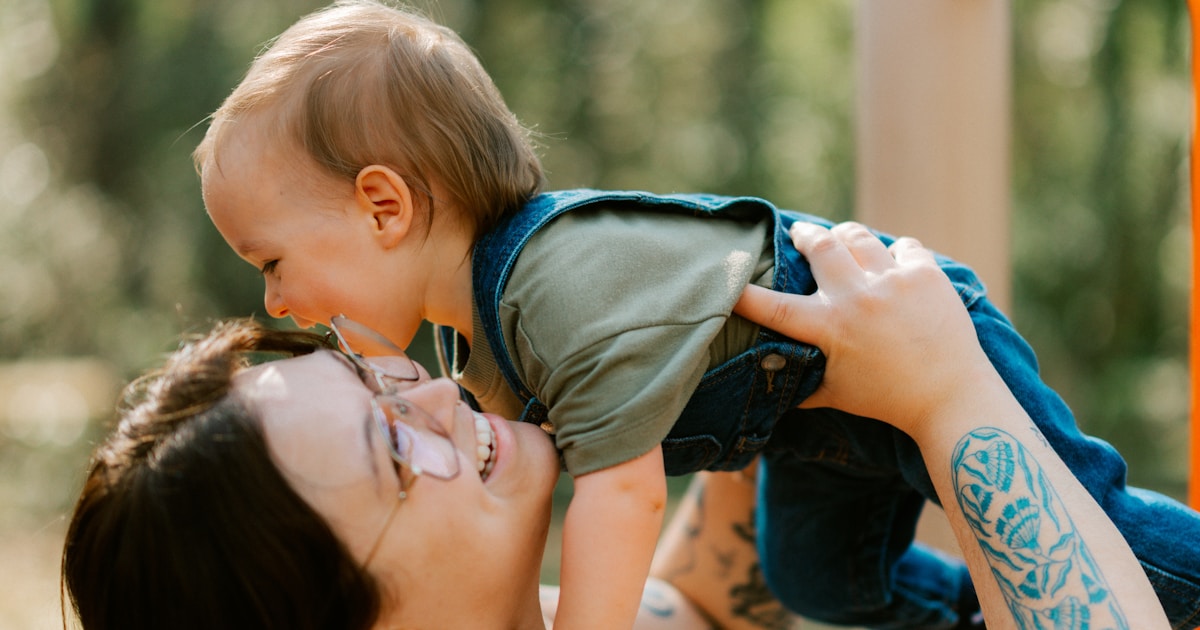
“¡Arriba!” (Up!) — during tickles, picks-ups, climbing
When your child hears the same phrase in the same context hundreds of times, the word eventually comes out of her own mouth because it feels natural and predictable.
Pair words with gesture and repetition. When you say “agua,” hold up a cup. When you say “arriba,” gesture upward. When you say “más,” bounce enthusiastically. Gesture grounds the word in concrete meaning and makes it stickier in your child’s memory.
Pause and wait. One of the most powerful techniques in early language facilitation is strategic silence. You say, “¿Quieres agua?” and then you wait. You make eye contact. You hold the anticipation. Sometimes your child will fill that silence with a word, a sound, or even just a meaningful look. And when she does — even if it’s not a perfect “agua,” even if it’s just “aaaa” — you respond enthusiastically and give her the water.
That pause creates the space for her to try. Without it, you’re just telling her what to say, not inviting her to participate.
Expand, don’t correct. If your child says “gato,” don’t say “Good job! Gato! Can you say gato?” Instead, respond as if she’s made a complete, meaningful statement. “¡Sí! Un gato gris. Está durmiendo. Qué bonito.” You’re showing her that her attempt was understood and valued, and you’re giving her more language to hear and absorb. This is far more powerful than correction.
Narrate what she’s doing. Running commentary on your child’s play, called “parallel talk,” is one of the strongest language-building techniques. “Estás apilando los bloques. Rojo, azul, amarillo. ¡Muy alto! Ahora está cayendo. Crash!” You’re not asking her to perform — you’re bathing her in language related to what she cares about. First words grow out of this rich input.
Follow her lead. If your child becomes absorbed in a toy, a book, or an activity, stay in Spanish with that focus. Don’t jump from topic to topic or try to teach random vocabulary. Depth of input in areas the child genuinely cares about produces more language than scattered exposure to lots of words.
When Bilingual Children Use Code-Mixing
Don’t be surprised if your child’s early attempts mix Spanish and English. “Agua more?” “Más milk?” This is called “code-mixing,” and it’s completely normal in bilingual development. It’s not confusion — it’s strategic language use. Your child is using the words she has available, sometimes from both languages, to communicate.
Code-mixing is completely normal and is not a sign of confusion or delay. Children aren’t choosing randomly — they’re making smart decisions about which word works best to get their message across.
Code-mixing typically decreases naturally as children get older and spend more time in monolingual contexts (like school). By age 4 or 5, most bilingual children become quite good at keeping languages somewhat separate, especially if they’re in a school setting where only one language is used.
In the meantime, when your child code-mixes, simply respond in the language of your context. If you’re speaking Spanish with her, respond in Spanish. If a teacher is speaking English, the teacher responds in English. No correction needed.
The Quiet Period (And How Not to Panic)
Some children, especially those with more reserved or cautious temperaments, go through a “quiet period” where they understand language in both languages but produce very little. They might go months from their first word to their second word. Parents often panic: “Is she delayed? Is the bilingualism causing a problem?”
Here’s the reassuring part: in my experience working with thousands of children, the quiet period almost always resolves naturally. Children who were very quiet at 18 months often explode into speech by age 2.5 or 3. And many of those children become articulate, fluent speakers of both languages.
If you notice your child is very quiet at production but seems to understand Spanish and English well, observe a few things:
-
Does she understand and follow simple directions in Spanish? (“Trae el zapato.” “Siéntate.”)
-
Does she respond to her name and engage socially?
-
Does she point and show you things?
-
Does she make eye contact and seem interested in people?
If the answer to these is yes, a quiet period is likely just personality and development — not a language problem.
When to consult an SLP about early speech concerns:
-
By 18 months, your child has no first words in either language and doesn’t seem to understand common words
-
Your child doesn’t point or engage socially with you
-
You notice a sudden loss of words she used to say
-
Your child doesn’t respond to her name or simple directions by 18-24 months
-
You’re deeply concerned despite strong understanding and social engagement
A bilingual SLP can evaluate development across both languages and give you clear guidance. Early speech-language intervention, if needed, is always worth pursuing.
Building on First Words: The 50-Word Explosion
Once a child says her first word, the pace often accelerates. Many bilingual children go from one word at 14-16 months to 50+ words by age 2. This isn’t a linear process — there’s often a plateau at 10 words, a jump to 25, another plateau, then a sudden explosion.
To support this growth:
Keep doing what worked for first words. Use repetitive phrases. Narrate her play. Pause and wait for her attempts. Expand her words into fuller sentences. Read books together. Sing songs.
Introduce slightly more complex language as she’s ready. Move from single words (“agua”) to simple two-word combinations (“más agua”). Encourage verbs: “¿Quieres saltar?” (Do you want to jump?) More verbs = more flexibility in expressing needs and ideas.
Stay patient with code-mixing. It’s not a sign of confusion — it’s a sign she’s actively managing two languages.
Celebrate the quiet words too. Not all first words are said out loud. Pointing, gesturing, bringing you things, and showing understanding count as language. Your child is communicating.
Key Takeaway: Bilingual First Words Arrive on Their Own Timeline
First words in bilingual children are not behind or confused simply because there are two languages. They’re different — sometimes drawn from both languages, often supported by a strong comprehension foundation that goes unseen. Your job isn’t to push or correct, but to create the conditions where words naturally emerge: meaningful repetition, warm responsive interaction, patience with the quiet periods, and genuine celebration of every attempt.
One word at 14 months. Three words by 18 months. Fifty words by age 2. The numbers matter less than the trajectory and the joy in your child’s eyes when she realizes her voice can shape the world around her. That joy — in Spanish, in English, or in the beautiful mixture of both — is the real measure of early language success.
For checklists of typical bilingual milestones from 6 to 36 months, lists of first-word vocabulary to target in Spanish, and strategies to encourage speech in both languages, download our free bilingual resources guide. And for a complete year-long roadmap of bilingual development with monthly check-ins, activity ideas, and growth expectations, the Palabra Garden 12-Month Bilingual Curriculum walks you through every stage from newborn through age 3 with confidence.
Related reading: Receptive vs. Expressive Bilingualism — Why Both Are Valid | When Your Child Refuses to Speak Spanish — Strategies That Actually Work
About the Author
Hi, I’m Lindsey Carleton, MA, CCC-SLP, a bilingual speech-language pathologist with more than 11 years of experience and a fellow toddler mom. I created Palabra Garden to support families who want intentional, play-based learning at home.
Through my work as an SLP, I’ve seen how powerful early language, social-emotional development, and hands-on learning can be for toddlers and preschool-aged children. Palabra Garden brings those same principles into your home with bilingual activities, preschool curriculum ideas, and simple strategies that support growing minds.
I believe children learn best through connection, curiosity, and everyday moments of discovery.