Spanish Screen Time That Actually Builds Vocabulary (Not Just Entertains)
By Lindsey Carleton, MA, CCC-SLP
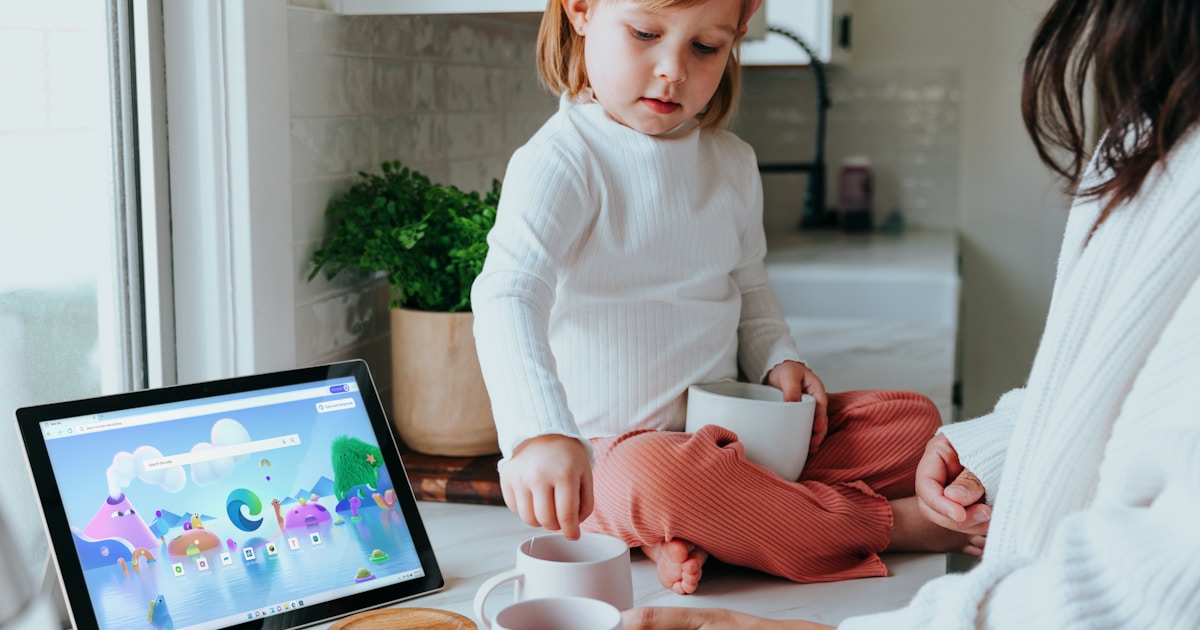
You turn on a Spanish episode of Bluey while you make dinner. Your 3-year-old is transfixed. Thirty minutes later, she’s repeating “Qué curioso” and pointing out the “perro” on screen. You feel the familiar parental guilt — screen time, language development, is this helping or hurting? — and then she says something in Spanish she’s never said before, and the guilt softens. Maybe this counts as real Spanish input after all.
Here’s what I tell families in my practice: screen time as a bilingual tool isn’t black and white. There’s a real difference between a child passively absorbing background noise and a child actively engaging with language-rich content while an adult sits nearby asking questions. The difference between these two is the difference between screen time that entertains and screen time that builds.
I’m not here to convince you screen time is harmless — there are real trade-offs with any screen exposure, and the research on dosage and timing is legitimate. What I am here to do is show you how to make the screen time you do allow count toward bilingual development, and how to choose Spanish media strategically so your child gets vocabulary, narrative exposure, and cultural connection alongside entertainment.
Active vs. Passive Screen Time: What Actually Builds Language
The critical difference comes down to one word: interactivity.
Passive screen time: Your child watches. Background noise or minimal narration. You’re in another room or focused on something else. No pausing, no discussion, no connection to lived experience.
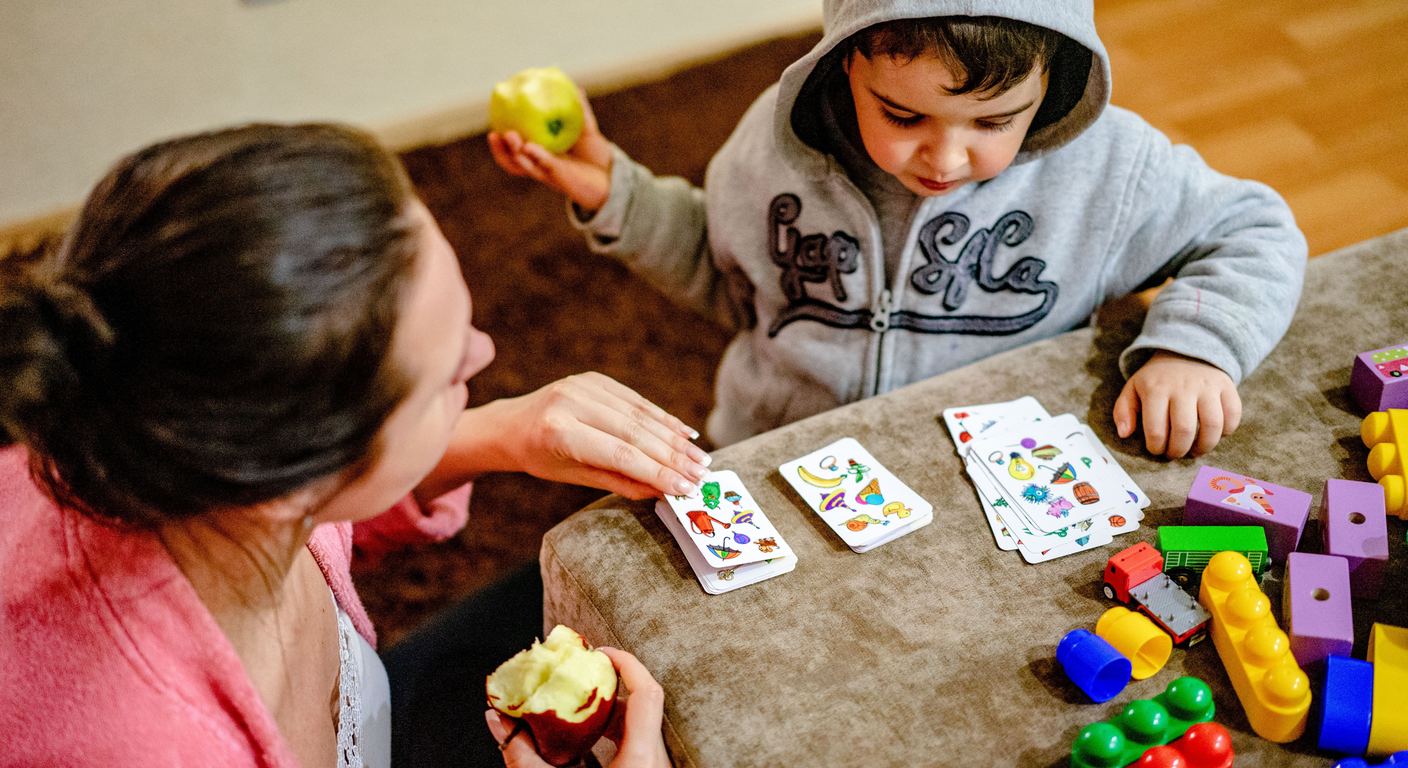
Active screen time: Your child watches and you watch alongside them (or nearby). You pause to point things out, ask questions, make predictions, and connect what’s on screen to your child’s real life. You narrate, you respond to what your child says, you extend the learning.
Research on bilingual development suggests that language input becomes functional language learning when it has these elements: emotional engagement, interactivity, and connection to the learner’s existing world. A show watched passively is mostly background noise. A show watched with you asking “What color is that?” and “What do you think happens next?” becomes vocabulary building in real time.
Active screen time builds vocabulary because:
-
Your pausing and discussing creates processing time (the brain needs time to decode and remember)
-
Your questions prompt production, not just reception
-
You connect Spanish words to real objects and experiences in your child’s actual life (“That perro looks like the dog in your picture!”)
-
You slow down and highlight the language rather than letting it wash over them
A 20-minute active viewing session with you engaged might build more Spanish vocabulary than two hours of passive background TV.
The Best Spanish Shows for Language Learning
Not all children’s programming is created equal. For language building, you want shows with:
-
Clear speech and good pronunciation
-
Repeated vocabulary and routines
-
Engaging characters your child cares about
-
Visual support for what’s being said
-
Cultural authenticity (not just Spanish words dubbed over English content)
Gold-standard Spanish shows for toddlers and preschoolers:
Bluey (Spanish dub) — The gold standard for active viewing. Clear audio, natural speech patterns, emotional depth that keeps parents engaged too. Each episode introduces 2-3 new vocabulary items and many repetitions of common words. The stories are predictable enough that children (and you!) can anticipate language and practice predicting what the characters will say.
Pocoyo — Minimalist animation, clear narration, lots of white space that draws attention to the language. The host frequently pauses to ask the child watching directly: “Can you find the…?” This creates that interactive moment even in a broadcast.
Canciones Infantiles / Canticos — More song-based than narrative, but repetitive music and simple vocabulary make them excellent for vocabulary absorption. Spanish songs stick differently than speech — the rhythm and rhyme carry words into long-term memory.
Elinor Wonders Why (Spanish dub) — Scientific language introduced naturally, good vocabulary for preschoolers learning about nature and discovery.
Peppa Pig (Spanish dub, “Peppa Pig en Español”) — Predictable routines and characters, lots of repetition of family and home vocabulary. The episodes are short and the speech is clear.
What to avoid:
-
Shows with adult narration that speaks about what’s happening rather than shows where characters speak to each other (narrated nature documentaries are beautiful but offer little language interaction)
-
Content with unclear audio or muffled speech
-
Shows where English dialogue dominates (you want Spanish primary, not Spanish secondary)
-
Content that overwhelms with visual stimulation (flashing lights, constant action) rather than supporting language comprehension
Co-Viewing: The Active Ingredient
Here’s the hard truth: high-quality show + passive watching = entertainment. High-quality show + your engaged presence = language learning.
What active co-viewing looks like:
Before the show:
-
“Today we’re watching Bluey. Bluey is a dog. She has a sister named Bingo. Should we see what Bluey does today?”
-
This activates what your child already knows and primes them for the language coming
During the show:
-
Pause occasionally: “Look, what’s happening?” “Do you see the…?”
-
Point out familiar words: “She said ‘perro’ — that’s a dog, just like your book!”
-
Ask predictions: “What do you think happens next?”
-
Make connections to your child’s life: “Bluey’s playing with her sister. You play with your brother too!”
-
Comment on emotions: “Bingo is happy! Can you see her smile?”
-
Repeat new words naturally: “She’s playing with the pelota (ball). That pelota is red.”
After the show (crucial!):
-
“What was your favorite part?” (Let them answer in any language — Spanish or English or mixed)
-
“What did Bluey do?” (This prompts narrative retelling, which solidifies the learning)
-
“Did you like the character who…?”
-
“We saw a perro today. What was the perro doing?”
These post-show conversations are where screen time becomes language learning. You’re asking your child to retrieve and organize what they just saw, which forces processing and memory encoding.
Realistic Dosing: How Much Is Reasonable?
The American Academy of Pediatrics recommends different amounts depending on age:
-
Under 18 months: minimal screen time (video chat is fine, but shows aren’t ideal)
-
18 to 24 months: high-quality programming with parent co-viewing only
-
2 to 5 years: 1 hour per day maximum of quality content
For bilingual families specifically, you might think: “If I’m giving screen time anyway, should it all be in Spanish?” Not necessarily. Research suggests that bilingual children benefit from exposure in both languages, and forcing all screen time into the minority language often backfires (kids resist, you stress). A reasonable approach:
-
Main show: Spanish, 2-3 times per week, 20-30 minutes per episode, with you co-viewing
-
Secondary exposure: bilingual or English shows, but narrated by you in Spanish when possible (“El gatito está saltando. Mira, está corriendo.”)
Total: roughly 1-1.5 hours per week of intentional Spanish media exposure. That’s realistic, maintainable, and genuinely builds vocabulary without becoming a production.
The consistency factor: Weekly viewing of the same show (Bluey on Tuesday mornings, for example) builds more vocabulary than sporadic exposure to many different shows. Repetition is how toddler brains encode language. The same characters, the same story structures, the same language patterns — this repetition is powerful.
Addressing Real Parental Concerns
I hear these concerns constantly, and they deserve honest answers:
“Isn’t screen time bad for language development?” Research shows that passive background TV while the parent is doing other things can slow down language development slightly. But intentional, co-viewed, interactive screen time in the minority language usually supports development. The difference is your presence and engagement.
“Won’t screen time replace real interaction?” Potentially, if it crowds out playtime, conversation, and real human connection. But 20-30 minutes of Spanish shows, 2-3 times a week, with active co-viewing, doesn’t replace meaningful interaction — it supplements it. The key is making sure screen time isn’t instead of play, conversation, and family time.
“My child refuses to watch Spanish shows.” This is very common, especially around age 4-5 when children become more aware of language preference. A few approaches: offer choice within Spanish (“¿Bluey o Pocoyo?”), don’t make it a power struggle, allow some English viewing alongside Spanish, or try a new show — sometimes one episode clicks and suddenly your child is interested.
“I don’t have time to co-view.” Do what you can. Even 10 minutes of co-viewing with questions is better than none. And realistically, some days you just hit play and make dinner. That’s life. The goal is mostly co-viewing, not perfectly engaged co-viewing 100% of the time.
“My child understands Spanish but won’t speak it.” This is actually fine. Receptive language is real language, and understanding comes before speaking. Screen time builds receptive vocabulary reliably. Speaking production follows later, especially if your child hears more English overall. (See Receptive vs. Expressive Bilingualism — Why Both Are Valid for more.)
Building a Spanish Media Routine That Sticks
Rather than ad-hoc screen time, build a predictable routine:
Daily micro-dose: One 5-10 minute Canciones Infantiles video while you prepare breakfast. Quick, consistent, high-repetition. Your child hears the same songs multiple times per week and naturally memorizes vocabulary.
Weekly main show: One 20-30 minute episode of Bluey or Pocoyo with you present. You pause, ask questions, discuss afterward.
Monthly new show trial: Once a month, introduce a new Spanish show for 1-2 episodes to see if it clicks. If it doesn’t, return to the shows you know work.
This structure gives Spanish media a consistent place in your bilingual routine without it dominating.
Key Takeaway: Screen Time Doesn’t Have to Be Wasted Time
The research is clear: passive background screen time offers minimal language benefit and some developmental trade-offs. But intentional, co-viewed, interactive Spanish media — especially with shows designed for language learning and cultural richness — can genuinely build vocabulary and narrative exposure.
The difference isn’t the show itself. It’s you, pausing to ask a question. It’s you pointing out a familiar word. It’s you discussing what happened when it’s done. That engagement transforms entertainment into learning.
Choose your Spanish shows strategically. Co-view when you can. Ask questions. Make connections to your child’s real life. Keep it reasonable in terms of dosage. And trust that this screen time, used this way, builds bilingual skills that stick.
For curated lists of best Spanish shows by age, co-viewing question scripts, and sample media integration plans, download our free bilingual resources guide. And for a complete bilingual development framework that integrates screen time strategically alongside conversation, play, and direct instruction, the Palabra Garden 12-Month Bilingual Curriculum shows you how to build vocabulary and language skills in every context of your child’s day.
Related reading: Car Ride Spanish — Turning Commutes Into a Daily Language Anchor | Outdoor and Nature Spanish — Building Vocabulary Through Play
Through my work as an SLP, I’ve seen how powerful early language, social-emotional development, and hands-on learning can be for toddlers and preschool-aged children. Palabra Garden brings those same principles into your home with bilingual activities, preschool curriculum ideas, and simple strategies that support growing minds.
I believe children learn best through connection, curiosity, and everyday moments of discovery.