Bilingual Flash Cards vs Curriculum: Which Works for Toddlers?
By Lindsey Carleton, MA, CCC-SLP
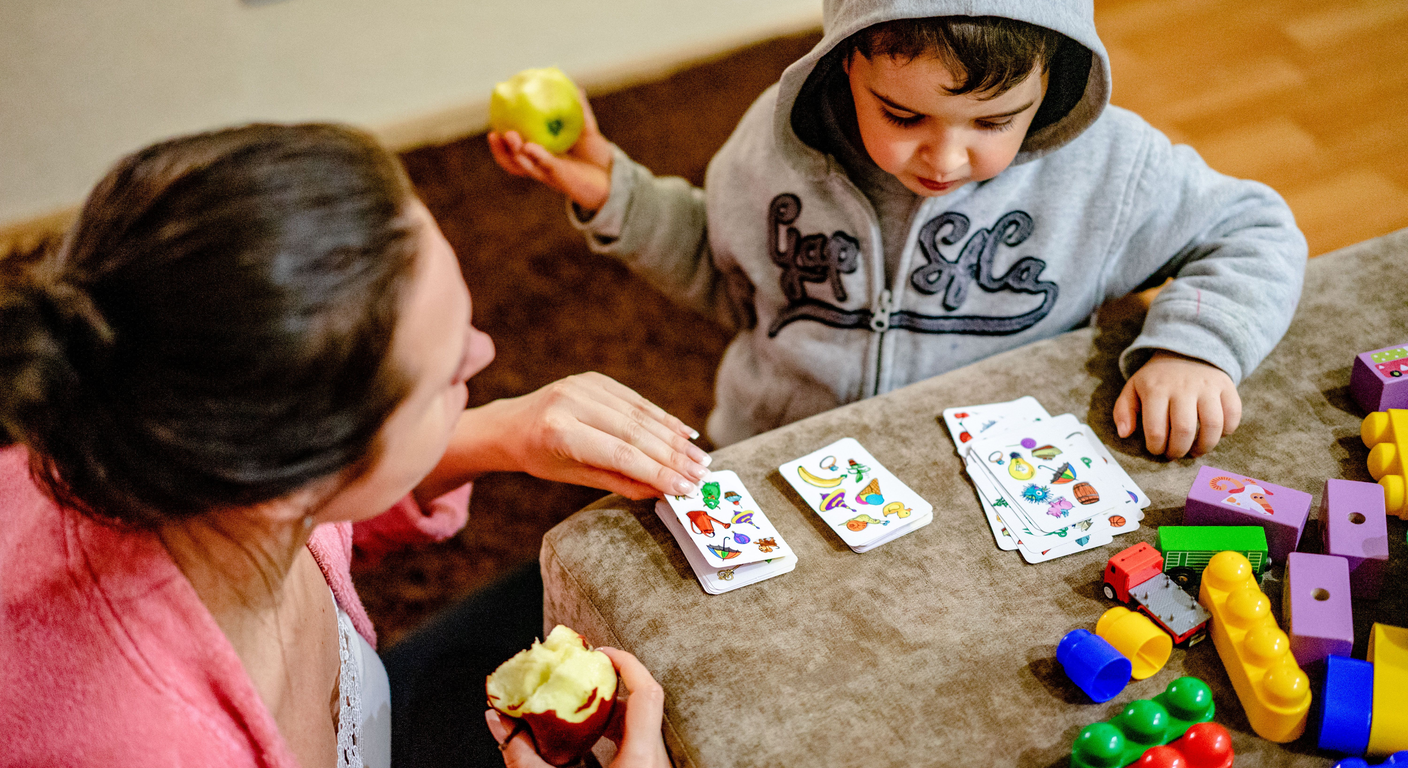
Flash cards teach a word. A curriculum teaches a child to use words. Both have a place in raising a bilingual toddler — but they solve completely different problems, and confusing the two is the most expensive mistake I see parents make.
I’m Lindsey, a speech-language pathologist and the founder of Palabra Garden. Here’s the honest comparison I’d give a parent at the start of their bilingual journey, with the bilingual flash cards toddlers actually use in real homes.
The fundamental difference in one sentence
Flash cards are a tool. A curriculum is a plan that uses tools.
That’s it. A curriculum tells you what to do on Monday morning and why. Flash cards are what you reach for during that Monday morning lesson. Buying only flash cards and expecting them to teach a language is like buying a hammer and expecting it to build a house.
Side-by-side comparison
| Factor | Flash cards | Curriculum |
|---|---|---|
| Cost | $15–45 one time | $150–300 one time |
| Best for | Targeted practice (vocab, speech sounds) | Full year of structured exposure |
| Requires planning | Yes, you build the lesson | No, lessons are sequenced |
| Best age | 2.5–6 | 2–5 |
| Daily time | 5 minutes | 10–15 minutes |
| Parent fluency needed | Helpful | None (with scripts) |
| Replay value | Endless | Year-long arc |
What flash cards do really well
A good set of cards is unmatched for a few specific jobs:
- Articulation practice — repetition of the same sound in different positions. Our bilingual articulation cards cover the 12 earliest sounds for $25.
- Quick wins in the car — three minutes at a red light beats a fancy app
- Building a specific category — animals, foods, colors, body parts
- Bedtime cool-downs — slower pace, screen-free, low-key
Cards excel at narrow and deep. Pick a category, drill it gently for a week, move on.
Where flash cards fail
Flash cards alone cannot do the heavy lifting of language acquisition. Here’s where they fall short:
- They isolate words from context, and toddlers learn from context
- They don’t tell a parent which words matter most at age 3 vs age 5
- They skip grammar, song, story, and routine — the four pillars of toddler language
- They get boring fast if used without a plan
- They make it easy to over-quiz, which kills motivation
A child can correctly identify manzana on a card and still never say it at the grocery store. Identification is not use.
What a curriculum does that cards can’t
A real curriculum sequences vocabulary, builds in repetition across days, and includes the scripts a parent uses during real-life moments — bath time, the car ride, the dinner table. Cards are static. A curriculum is the choreography of a week.
A few examples of what curriculum provides that cards don’t:
- Monday’s words show up in Friday’s song. That’s how toddlers retain vocabulary.
- The same word appears across breakfast, books, and outdoor play. Cross-context exposure is one of the strongest drivers of retention.
- Parents get a phonetic script. No fluency required.
Want a fully sequenced year of bilingual exposure? Our 12-month curriculum is $199 and built specifically for parents who don’t speak Spanish.
The hybrid approach that actually works
Most families do best with both. Here’s the stack I recommend:
- A core curriculum as your spine (10–15 minutes a day)
- A flash card set for targeted practice 2–3 times a week
- One free resource as a “rainy day” backup — grab our bilingual freebie
That’s it. Don’t add more. The mistake I see is families buying eight things and using none of them.
When cards alone are enough
You can skip the curriculum if:
- You’re a fluent Spanish speaker already running a structured home routine
- Your child is over 5 and already understands hundreds of words
- You’re doing one-parent-one-language and need supplemental vocabulary
When curriculum alone is enough
You can skip cards (for a while) if:
- Your child is under 2.5 — they’re more songs-and-stories at that age
- You have very limited time and just want one thing to work into your daily routine
- Your curriculum includes its own card or printable component
Cost comparison over a year
| Approach | Year 1 cost |
|---|---|
| Cards only ($25 starter set) | $25 |
| Curriculum only ($199) | $199 |
| Both (cards + curriculum) | $224 |
| Tutor only (1x/week at $40) | $2,080 |
| App subscription only ($12/mo) | $144 |
Cards are cheap. Curriculum is mid-cost. Tutors are the most expensive route by an order of magnitude, and for ages 2–5, interactive, parent-led exposure tends to outperform passive instruction anyway.
Frequently asked questions
Can my toddler learn Spanish from just flash cards?
Probably not. Cards build recognition but rarely produce conversational ability. A toddler exposed only to cards may know 200 words on cardboard but never use one in a sentence. They need context, repetition, and real-life moments — which is what a curriculum sequences.
How do I keep cards from getting boring?
Rotate. Use a max of 10 cards per session. Turn it into a game — hide one, guess which, find around the room. Skip a few days when interest drops. Boredom is a signal to switch the activity, not push harder.
Where does your articulation deck fit?
The articulation cards starter set is specifically for speech-sound practice for ages 2–5 — different goal than vocabulary cards. Both have a place. The complete set covers all 25 sounds.