When Your Child Refuses to Speak Spanish — Strategies That Actually Work
By Lindsey Carleton, MA, CCC-SLP
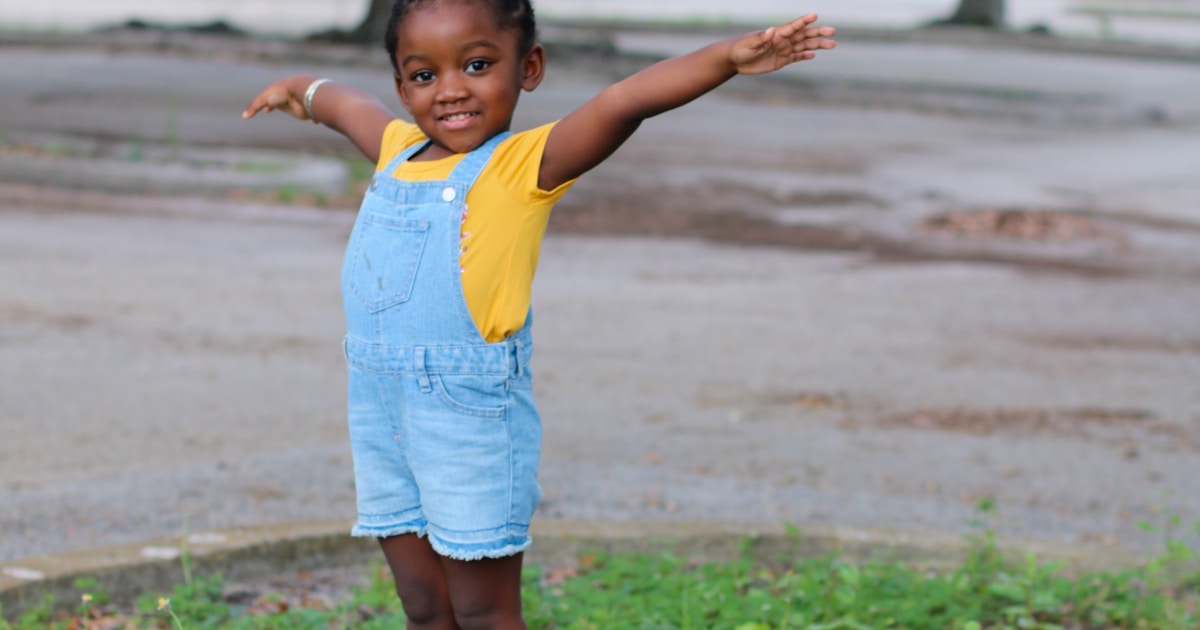
Your four-year-old gets in the car after preschool. You greet her in Spanish: “¿Cómo estuvo tu día, mi amor?” She rolls her eyes — an actual eye roll, from your preschooler — and says, “Mom, I only speak English. Spanish is for babies.” Your stomach sinks. You’ve worked so hard to keep Spanish alive. You imagined her growing up proudly bilingual. And now she’s rejecting it entirely. It feels personal. It feels like failure.
This is one of the most common — and most emotionally charged — challenges bilingual families face. And I want to tell you something clearly: your child’s refusal of Spanish is not a failure. It’s not a sign that bilingualism is impossible. It’s not a permanent forecast of her future. It’s a completely normal, developmentally predictable phase that happens in most bilingual children at some point between ages 3 and 7.
Understanding why kids refuse Spanish, knowing what not to do, and having concrete strategies for the long game can help you navigate this frustrating season without losing the bilingual dream or damaging your relationship with your child.
Why Children Refuse Spanish (And It’s Not What You Think)
When children suddenly refuse Spanish, parents often interpret it as rejection of the language or culture itself. In reality, language refusal is usually about power, identity, and belonging.
Social pressure is the biggest driver. By age 3 or 4, children are acutely aware of what language “counts” in their world. If English is the dominant language at preschool, with all her friends, in the wider community, and often in media and screens, Spanish can feel like a minority choice. Rejecting it feels like joining the majority. It feels powerful. “I speak English like my friends do.”
Ease matters enormously. If your child has spent her entire life hearing English 60% of the time and Spanish 40%, English is genuinely easier for her neurologically. It’s the path of least resistance. When a child is tired, overstimulated, or just wants to communicate quickly, she’ll reach for her stronger language. That’s not laziness — that’s efficient language use.
Identity negotiation is real. Between ages 3 and 7, children are intensely concerned with fitting in, being “normal,” and belonging to their peer group. If most of her peers don’t speak Spanish, Spanish can feel weird or different in a way she suddenly wants to hide. She might say things like, “I’m American, not Spanish,” not understanding that these aren’t mutually exclusive.
Asserting independence. Refusal of Spanish can also be about control. If Spanish is something a parent values, rejecting it becomes a way for the child to assert independence and push back. It’s not really about Spanish — it’s about autonomy.
Tiredness and overwhelm. Some children refuse Spanish during transition periods — starting preschool, moving to a new house, a new sibling arriving. When they’re depleted, they default to English and resist Spanish as too much effort.
Understanding the real reason behind refusal — social pressure, ease, identity concerns, power struggles, or overwhelm — helps you respond with empathy rather than frustration.
What NOT to Do (The Strategies That Backfire)
Before I tell you what works, let me be clear about what makes things worse:
Don’t force or demand Spanish. “Say it in Spanish.” “You can’t have a snack until you ask me in Spanish.” This creates resentment, power struggles, and negative associations with the language. Your child learns that Spanish is a punishment or a barrier to what she wants, not something joyful or meaningful.
Don’t shame or make her feel guilty. “Your abuela would be so sad that you don’t speak Spanish.” “You’re forgetting your culture.” This heaps shame onto a developmental phase and doesn’t actually encourage Spanish — it just makes your child feel bad about herself.
Don’t bribe with English. This one’s counterintuitive but crucial: if your child refuses Spanish, don’t reward her compliance with English. If she says, “I want water,” resist the urge to say, “Can you say ‘agua’?” and then praise her when she does. That teaches her that the payoff for Spanish is English — the opposite of what you want.
Don’t translate everything into English immediately. When your child speaks to you in English, don’t translate into Spanish and then continue the conversation in Spanish. This feels like correction and breaks the natural flow. Instead, simply respond in Spanish and keep the interaction natural.
Don’t compare her to other bilingual children. “Maria’s daughter speaks perfect Spanish.” Your child hears: “You’re failing.” Comparison never motivates children to embrace a language they’re already resisting.
Strategies That Actually Work (The Long Game)
The families I see succeed with language refusal share a few key approaches. They’re all based on the same principle: keep Spanish present, valuable, and un-demanded. Make it irresistible without forcing.
Stay calm and matter-of-fact. If your child refuses to speak Spanish, your job is simply to keep speaking Spanish. Don’t react with frustration or disappointment. “Okay, I speak Spanish, so I’ll answer you in Spanish.” No punishment, no shame, no big deal. This removes the power struggle. There’s nothing to rebel against if you’re not insisting.
Maintain Spanish input without requiring output. This is the key insight: your child doesn’t have to speak Spanish for Spanish to be active in her life. She can understand it passively and still be bilingual. So keep speaking Spanish, reading Spanish books, playing Spanish music, watching Spanish shows. You’re not asking her to perform. You’re just making sure Spanish is present.
Research on receptive bilingualism (understanding a language without speaking it) shows that many children who seem to refuse Spanish during the 4-7 age range eventually start speaking it again in adolescence or adulthood, especially if the language was present in their environment all along.
Find genuinely high-interest Spanish content. If your child rejects Spanish songs and stories, but loves dinosaurs, find Spanish content about dinosaurs. If she loves cartoons, find Spanish cartoons she actually wants to watch. The goal is to associate Spanish with something she cares about, not something imposed.
Some kids will resist anything presented as “Spanish learning” but will happily engage with Spanish content if it’s framed as just entertainment. “Look, there’s a dinosaur show in Spanish. Want to watch it?” — much more likely to succeed than “Let’s listen to Spanish music for your Spanish practice.”
Connect with Spanish-speaking peers. One of the most powerful motivators is other children speaking Spanish. If your child has friends or cousins who speak Spanish, playtime together becomes a context where Spanish feels natural and peer-approved, not like a parental requirement.
Seek out Spanish-speaking playdates, bilingual preschools or after-school programs, or Spanish immersion camps in summer. When your child’s peers speak Spanish and it seems cool, her resistance often softens.
Visit Spanish-speaking countries or communities. Travel to a Spanish-speaking country where everyone around your child speaks Spanish, and English becomes the useless language. Suddenly Spanish is the currency of connection, not a parental imposition. Even a week or two of immersion can shift a child’s perspective dramatically.
Similarly, visiting Spanish-speaking relatives, attending Spanish church services, or spending time in Spanish-speaking neighborhoods can help a child understand that Spanish is a real, live language people use, not just something parents want them to do.
Make Spanish fun and low-pressure. Play Spanish games she genuinely enjoys. Tell jokes in Spanish. Watch her favorite shows in Spanish. Listen to Spanish music together without commentary. Read books about topics she cares about in Spanish. The less this feels like school, the more likely she is to stay engaged.
Reframe Spanish as a superpower. Some children respond well to the idea that being bilingual is special and valuable. “You can understand two languages — that’s like having a secret code.” “When you’re older, you’ll be able to talk to more people than your English-only friends.” Not as a guilt trip, but as genuine excitement about what bilingualism offers.
Accept and celebrate receptive bilingualism. If your child understands Spanish but won’t speak it, that’s okay. That’s real bilingualism. You can keep speaking, and she’s absorbing. Many children eventually move from receptive to expressive on their own timeline. Some never do — and that’s still a valuable form of bilingualism.
(See our full post on Receptive vs. Expressive Bilingualism — Why Both Are Valid for more on this.)
When Refusal Is a Phase (And When It Might Be More)
Most language refusal peaks between ages 4 and 6, then naturally softens as children get older and develop stronger identity and confidence. By age 10 or 11, many bilingual children who refused Spanish at age 5 become genuinely interested again. Adolescence and adulthood bring new motivation: connecting with cultural identity, impressing relatives, accessing a wider social world.
This doesn’t mean you should just wait it out passively. But it does mean this season is temporary.
Watch for these patterns:
Your child understands Spanish. This is the best predictor of eventual Spanish production. If she’s absorbing the language, even if she’s not speaking it, the foundation is there.
Your child engages with Spanish content she chooses. If there’s any Spanish show, song, or game she genuinely wants to engage with, that’s a signal the language hasn’t been completely rejected — just certain contexts have been.
Your child is healthy and developing normally otherwise. Language refusal isolated to Spanish (while English is developing well) is almost always social and developmental, not a speech-language concern.
When to consult an SLP about refusal:
If your child is refusing both languages, or if her English development seems delayed or disordered, consult a bilingual SLP to rule out any underlying language concerns. But refusal of one language in a bilingual home, when the other language is strong, is almost always a phase, not a disorder.
Protecting Your Own Emotional Wellbeing During Refusal
This journey is emotional for parents. You’ve carried the vision of a bilingual child for years. When they reject it, it can feel like rejection of your identity, your culture, your family’s values. That pain is real and valid.
A few reminders for yourself:
You are not failing. Language refusal is a normal part of bilingual development, not proof that your approach was wrong.
Your child rejecting Spanish isn’t rejecting you or your family. It’s a developmental phase, usually about social belonging.
Bilingualism isn’t all-or-nothing. A child who understands Spanish but speaks only English is still bilingual. A child who refuses Spanish at age 5 but speaks it fluently at age 15 is still bilingual.
The investment you’ve made in Spanish input, even if your child isn’t speaking it now, is not wasted. It’s creating brain architecture and linguistic knowledge that will serve her for life.
Key Takeaway: Stay the Course Without Pressure
Language refusal is one of the most challenging seasons of bilingual parenting. But it’s also one of the most predictable and temporary. Your job is to keep Spanish present in your child’s life — through your own speech, through media, through community connections — without demanding that she perform or speak it.
The families I see succeed are those who can hold both truths at once: genuine disappointment about the refusal, and genuine patience with the phase. They don’t force or shame. They don’t give up. They stay steady, keep Spanish alive, and trust that their child’s relationship with the language will evolve.
Some children return to Spanish easily once they feel the choice is theirs. Some embrace it in adolescence or adulthood. Some become lifelong receptive bilinguals who understand but don’t speak. All of these outcomes, while different from the imagined path, are valid.
Your Spanish is still being heard. It’s still being learned. And the seeds you’re planting now are still growing, even if you can’t see them yet.
For strategies tailored to specific ages and scenarios of language refusal, conversation scripts you can use with your child, and a roadmap for supporting bilingualism through the refusal phase, download our free bilingual resources guide. And for a complete year-long approach to keeping Spanish alive through every developmental phase and social pressure your child faces, the Palabra Garden 12-Month Bilingual Curriculum includes month-by-month strategies for sustaining bilingualism through the toughest ages.
Related reading: Receptive vs. Expressive Bilingualism — Why Both Are Valid | Building Spanish Pride When Your Child Faces Peer Pressure at School
About the Author
Hi, I’m Lindsey Carleton, MA, CCC-SLP, a bilingual speech-language pathologist with more than 11 years of experience and a fellow toddler mom. I created Palabra Garden to support families who want intentional, play-based learning at home.
Through my work as an SLP, I’ve seen how powerful early language, social-emotional development, and hands-on learning can be for toddlers and preschool-aged children. Palabra Garden brings those same principles into your home with bilingual activities, preschool curriculum ideas, and simple strategies that support growing minds.
I believe children learn best through connection, curiosity, and everyday moments of discovery.