Grocery Store Spanish — Turning Errands Into Language Practice
By Lindsey Carleton, MA, CCC-SLP
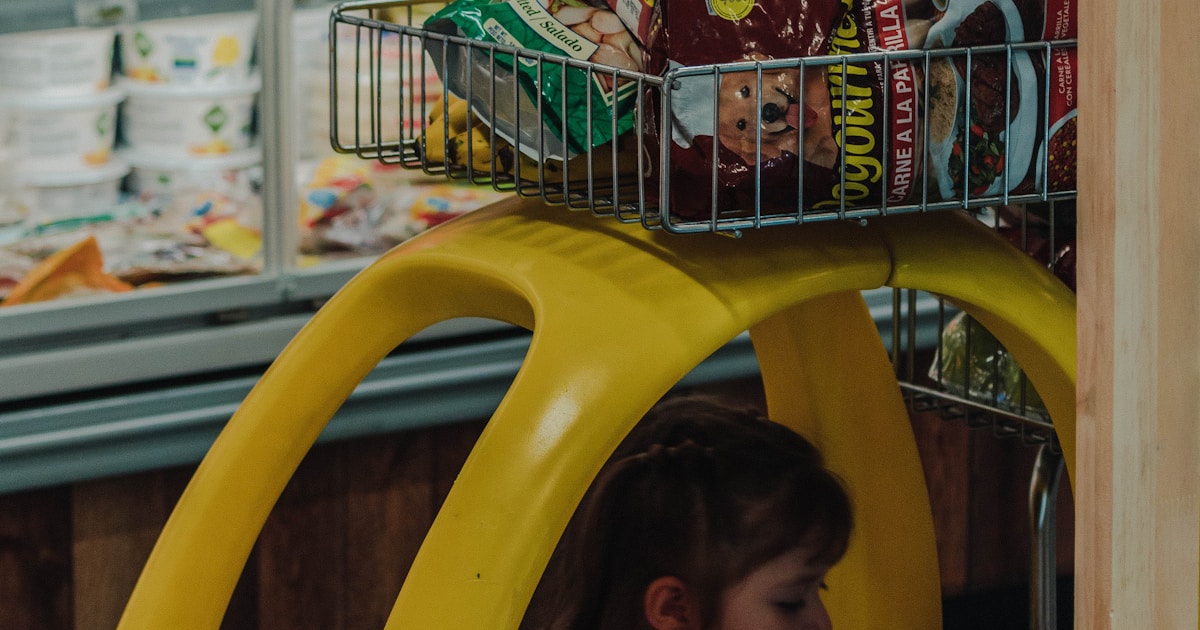
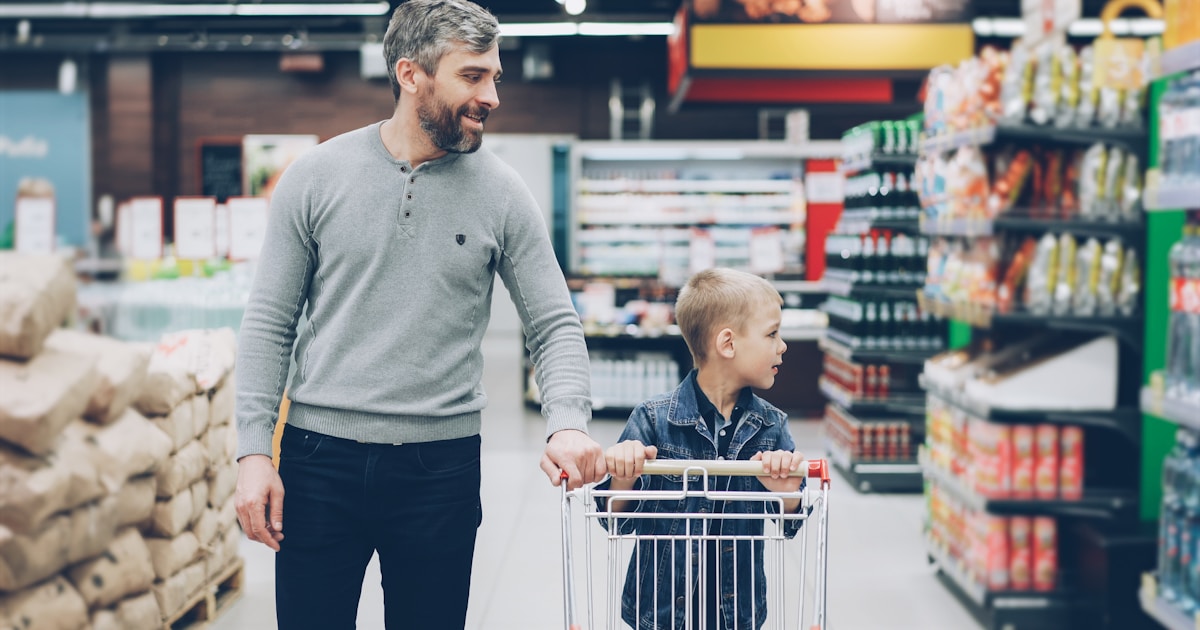
You’re pushing the cart through the produce section, your toddler sitting in the seat, and you realize you’re on autopilot — reaching for tomatoes, bagging lettuce, moving through the rows the same way every week. But what if those 30 minutes could be one of the most language-rich parts of your child’s week?
The grocery store is one of the most underutilized bilingual spaces in family life. You’re already there weekly. Your child is engaged, the environment is full of concrete, visible objects (not abstract), and there’s natural repetition built into the errand itself. You don’t need special materials, fancy activities, or planning beyond what you’re already doing.
For Spanish-learning families, especially those with limited daily one-on-one time, the grocery trip can become an anchor routine — a predictable, recurring context where Spanish is the language of exploration, discovery, and naming. This post covers how to turn what you’re already doing into intentional language practice.
Why the Grocery Store Is Language Gold
Real objects, real context. Your child sees an actual apple, holds it, feels its weight and texture, and hears you say “manzana.” That multi-sensory, concrete learning anchors vocabulary deeper than flashcards ever could. Research on bilingual acquisition shows that children learn words fastest when they encounter them paired with real-world objects and actions.
Repetition without drilling. You go to the store every week. You pass the same sections, encounter the same items, follow a familiar pattern. That natural repetition — the same vegetables appearing week after week, the same colors and shapes — is a gift for language development. Spaced repetition strengthens memory in ways cramming cannot.
Motivation through choice. When you let your child pick items, choose between two fruits, or help you find the “red apples,” you’re creating agency. A toddler who chooses a banana is more engaged than one being passively told vocabulary. That engagement deepens processing.
Authentic family routine. This isn’t “Spanish practice time” you’re squeezing in. It’s part of how you live. Children internalize language that’s woven into real family activity, not cordoned off into special lessons.
Building Vocabulary Around Produce
The produce section is where most families naturally start, and it’s where you’ll see the fastest vocabulary growth because fruits and vegetables are visually distinctive and repetitive.
Start with 3-5 core items. Rather than overwhelming yourself with every vegetable, pick the ones you actually buy: “Compramos manzanas, plátanos, zanahorias, lechuga, y tomates.” As your child’s vocabulary grows, you can expand. But starting small means you’ll use the same words repeatedly, week after week.
Use adjectives alongside nouns. Don’t just say “manzana” — layer in color, size, and texture: “Mira esta manzana roja y grande” (Look at this big red apple). “Esta zanahoria está larga y anaranjada” (This carrot is long and orange). You’re building not just nouns but descriptive language.
Play with quantities. Point as you count: “Una manzana, dos manzanas, tres manzanas.” Let your child help count items into the bag. Counting is both language and math, and the repetition at the store reinforces number words naturally.
Name the actions you’re taking. As you shop, narrate: “Estoy buscando tomates. ¿Ves los tomates rojos? Vamos a poner estos tomates en la bolsa” (I’m looking for tomatoes. Do you see the red tomatoes? We’re going to put these tomatoes in the bag). This “self-talk” is one of the most powerful language-building techniques available.
Make a Spanish Shopping List (Together)
Before you go to the store, create a simple shopping list in Spanish. If your own written Spanish is rusty, that’s fine — use Google Translate or a Spanish language app to check. Your child doesn’t need perfect Spanish; she needs consistent input.
For toddlers (18-36 months), make a pictorial list — just images of the items you’ll buy. Point to each picture before you shop: “Hoy compramos manzana, plátano, y zanahoria” (Today we’re buying apple, banana, and carrot).
For preschoolers (3-5 years), add simple words under the pictures. Even a child who can’t yet read will start recognizing the visual shape of words like “manzana” and “plátano.”
Better yet, let your child dictate the list. Ask her, “¿Qué queremos comprar?” (What do we want to buy?), and write down what she says in Spanish. Even if she answers in English, you write it in Spanish: “She says ‘grapes,’ so we write ‘uvas.’” Now the list is hers, and she’s invested in finding those items.
When you arrive at the store, reference the list together: “Tenemos que buscar… manzanas. ¿Dónde están las manzanas?” (We need to find… apples. Where are the apples?). Let her lead you to the section, find the item on the list, and check it off. That sense of accomplishment builds both language and confidence.
Make Shopping Games
Games turn language practice into play, which is where children learn best.
I Spy in Spanish: “Veo algo rojo. ¿Qué es?” (I spy something red. What is it?). Your child has to look around the produce section, identify a red item, and name it. This builds color vocabulary and keeps her engaged beyond the mechanics of shopping.
Hot and Cold: Hide one item (a banana, a tomato) in your bag or behind your back. Let your child guess what it is. As she gets warmer/closer to the right guess, say “Más caliente” (Warmer). When she’s cold, say “Más frío” (Colder). The guessing game extends language use and makes the sensory exploration playful.
Quantity Comparisons: Hold up two bunches of grapes. Ask, “¿Cuál tiene más uvas? ¿Cuál tiene menos?” (Which one has more grapes? Which has fewer?). You’re building not just Spanish but early math concepts.
Texture and Sensory Language: Pick up items and describe them together: “Este melocotón es suave y redondo” (This peach is soft and round). “Esta piña es áspera” (This pineapple is rough). “El aguacate está duro ahora, pero pronto estará blando” (The avocado is hard now, but soon it will be soft). You’re expanding vocabulary beyond simple labels into rich descriptive language.
Visit Latin/Spanish Grocery Stores
If there’s a Latin grocery store or tienda in your area, visit it alongside your regular supermarket — ideally monthly or quarterly. The experience is different enough to refresh engagement and expose your child to authentic cultural commerce.
Spanish-language groceries often stock items your regular store doesn’t — different varieties of beans, tropical fruits, specialty products — and the signage, staff interactions, and shopping patterns feel distinctly cultural. Your child hears Spanish naturally embedded in how people shop, how cashiers greet customers, what families are buying.
Point out items you don’t normally see: “Mira, aquí venden nopales” (Look, they sell cactus here). “Estos plátanos se ven diferentes de los del otro supermercado” (These plantains look different from the ones at the other supermarket). That comparative language builds awareness that Spanish-speaking families have different food traditions, different preferences, different ways of living — which deepens both language and cultural identity.
If visiting a Spanish-language store isn’t feasible in your area, you can still build cultural richness by choosing items that feature in Spanish-speaking traditions — plantains, cilantro, certain varieties of beans, tropical fruits — and naming them in Spanish consistently, explaining what families make with them: “Los plátanos maduros se usan para hacer plátanos maduros, un postre” (Ripe plantains are used to make maduros, a dessert).
Make Counting and Money Language Real
For preschool-aged children, the checkout is where numerical and transactional language comes alive.
Practice counting as you load the belt: “Uno, dos, tres tomates. Tenemos tres tomates” (One, two, three tomatoes. We have three tomatoes).
Talk about money: “El precio es tres dólares” (The price is three dollars). Even young children begin to understand that items have costs. For slightly older preschoolers, you can play simple estimation games: “¿Cuánto cuesta la manzana? ¿Cincuenta centavos? ¿Un dólar?” (How much does the apple cost? Fifty cents? A dollar?).
Narrate the checkout process: “La señora está escaneando los tomates. Ahora están en la bolsa. ¿Cuántas bolsas tenemos?” (The cashier is scanning the tomatoes. Now they’re in the bag. How many bags do we have?). You’re building vocabulary around the grocery transaction while making the abstract process concrete for your child.
Keep It Sustainable and Joyful
The biggest mistake families make is turning grocery shopping into formal “Spanish practice time” with pressure and correction. That kills the joy.
Your goal isn’t perfection in your child’s responses. It’s exposure, repetition, and association between Spanish words and real objects your child encounters week after week. Some weeks your child will chat constantly in Spanish. Other weeks she’ll respond mostly in English or not talk much at all. That’s developmentally normal.
If your own Spanish is limited, that’s actually fine — your child will hear authentic Spanish from the store itself: staff conversations, product names, signage. And you’ll learn alongside her. Narrating in simple Spanish — “Busco tomates. Tomates rojos” (I’m looking for tomatoes. Red tomatoes) — models that language can be simple and functional, not perfect.
The goal is consistency, not intensity. A 30-minute grocery trip every week, done with attention and simple narration, builds vocabulary and language confidence far more effectively than sporadic intensive practice.
Key Takeaway: Routine Errands Are Language Anchors
The grocery store doesn’t need to be transformed into something it’s not. You’re already there, already pointing at things, already making choices about what to buy. By narrating that experience in Spanish, building simple games into your routine, letting your child lead and choose, you’re creating one of the most natural, sustainable bilingual contexts available.
Over weeks and months, your child learns not just the words for produce, but the language patterns of shopping, comparing, counting, and choosing. She builds confidence navigating a Spanish-speaking context. She sees Spanish as practical, useful, woven into her real life — not as something separate and special.
Your weekly grocery trip becomes a reliable anchor in your bilingual week, full of repetition, real objects, and opportunities for both connection and language growth.
For a complete guide to turning daily errands and routines into bilingual learning opportunities, download our free bilingual resources guide. And for structured, age-appropriate vocabulary games and activities that extend the learning you’re already doing at home, the Palabra Garden 12-Month Bilingual Curriculum includes produce vocabulary units, sensory activities, and routines you can repeat weekly for maximum language impact.
Related reading: Car Ride Spanish — Turning Commutes Into a Daily Language Anchor | Sensory Play in Spanish — Vocabulary Through Hands-On Discovery
About the Author
Hi, I’m Lindsey Carleton, MA, CCC-SLP, a bilingual speech-language pathologist with more than 11 years of experience and a fellow toddler mom. I created Palabra Garden to support families who want intentional, play-based learning at home.
Through my work as an SLP, I’ve seen how powerful early language, social-emotional development, and hands-on learning can be for toddlers and preschool-aged children. Palabra Garden brings those same principles into your home with bilingual activities, preschool curriculum ideas, and simple strategies that support growing minds.
I believe children learn best through connection, curiosity, and everyday moments of discovery.