Raising a Bilingual Child as a Single Parent: A Realistic Guide
By Lindsey Carleton, MA, CCC-SLP
Most bilingual parenting advice assumes two parents are in the picture. “One parent speaks English, one speaks Spanish.” “Divide language duties between caregivers.” “Have your partner reinforce what you’re teaching.” If you’re a single parent, this advice is useless at best and discouraging at worst. It implies that bilingualism requires a team, and that solo parents need not apply.
That’s not true. Single parents raise bilingual children every day. The approach looks different from a two-parent household, but the outcomes can be just as strong. The advantage you have as a solo parent is total control over your child’s home language environment. There’s no conflicting strategy, no partner who forgets to use Spanish, no debates about method. You set the plan and you execute it. Here’s how.
The Single-Parent Bilingual Advantage
Consistency is the single most important factor in bilingual success, and single parents often have an easier time being consistent because there’s one decision-maker. You decide that mealtimes are in Spanish, and mealtimes are in Spanish. There’s no negotiation, no forgetting, no one accidentally defaulting to English during your Spanish routine.
You also have a deeper one-on-one bond with your child, and language is intimately tied to bonding. When Spanish is the language of your bedtime stories, your morning greetings, and your “I love you” moments, your child develops an emotional attachment to the language that’s uniquely tied to you. That emotional anchor is one of the strongest predictors of long-term bilingual persistence — stronger than vocabulary drills, apps, or classes.
The challenge for single parents isn’t commitment. It’s bandwidth. You’re doing everything alone, and adding “teach a second language” to the list feels impossible on the hard days. That’s why the approach needs to be realistic, low-effort, and embedded in what you’re already doing.
Start With 3 Non-Negotiable Spanish Moments
Don’t try to make your entire day bilingual. Pick three moments that happen every day no matter what, and commit to using Spanish during those moments. Everything else stays in English. This keeps the effort manageable on your worst days while maintaining the consistency that drives results.
Moment 1: Morning greeting. “Buenos dias, mi amor! Como dormiste?” (Good morning, my love! How did you sleep?). This takes 10 seconds and starts every day with Spanish. Even on mornings when you’re rushing and exhausted, you can say buenos dias.
Moment 2: One mealtime. Pick whichever meal is calmest — for many single parents, that’s breakfast or dinner. Use Spanish to offer choices, label food, and ask simple questions. “Quieres leche o agua?” “Dame el plato.” “Que rico!” Five minutes of Spanish, built into something you’re already doing.
Moment 3: Bedtime. One bilingual book or Spanish lullaby, plus “buenas noches, te quiero.” This is the most important of the three because bedtime is calm, focused, and emotionally charged. Vocabulary introduced before sleep is consolidated during sleep — your child’s brain processes it while they dream. For a full breakdown of how to build a bilingual bedtime routine, see our bedtime routine guide.
Three moments. Maybe 15 minutes total. That’s your baseline. On good days, you’ll naturally add more Spanish — during play, during errands, during car rides. On survival days, you hit the three moments and call it a win. Both days count.
Let Music and Media Do the Work When You Can’t
As a single parent, you don’t have a partner to take over when you need a break. Spanish media fills that gap. It provides language exposure during the times when you’re cooking dinner, answering emails, or just sitting down for five minutes.
Spanish music playlists on shuffle. Play them during independent play, in the car, during meals. Your child absorbs vocabulary, pronunciation, and rhythm passively. Our Spanish songs guide has a curated list of toddler-friendly songs with translations.
Switch one show per day to Spanish audio. Netflix, Disney+, and Amazon all offer Spanish dubs for most kids’ shows. If your child already loves Bluey or Cocomelon in English, they’ll accept it in Spanish because the visual story carries comprehension. That’s 20-30 minutes of Spanish input you didn’t have to produce yourself.
Spanish audiobooks or podcasts at rest time. If your child has a quiet time or pre-nap wind-down, play a Spanish children’s audiobook in the background. Even half-attention exposure contributes to phonological development.
None of these replace interactive conversation — your direct speech to your child is always the highest-value input. But on the days when you’re tapped out, media keeps the Spanish flowing so your consistency doesn’t break.
Build a Support Network
You’re parenting alone, but your child’s bilingual journey doesn’t have to be solo. Every additional source of Spanish input reduces the pressure on you and makes the bilingualism more resilient.
Spanish-speaking babysitters or caregivers. If you’re hiring childcare, prioritize Spanish speakers when possible. Even a babysitter who speaks Spanish during play provides hours of interactive input you don’t have to generate. This is one of the highest-impact investments a single parent can make in bilingual development.
Library story times in Spanish. Many public libraries offer bilingual or Spanish-language story hours. It’s free, it’s social, and it gives your child the experience of hearing Spanish from someone other than you.
Bilingual play groups. Search Facebook or local parenting boards for bilingual family meetups. Your child hearing another kid speak Spanish is worth more than a hundred repetitions from you, because peer language carries enormous social weight for young children.
Family members. If any relatives speak Spanish — even basic Spanish — enlist them. “When you FaceTime with Tia Maria, she talks in Spanish.” Even 10 minutes of a weekly video call with a Spanish-speaking relative adds variety to your child’s input sources.
Use Scripted Activities So You Don’t Have to Think
Decision fatigue is real for single parents. The last thing you need at 5 PM is to figure out how to teach the Spanish word for “butterfly” to a cranky toddler. Scripted activities eliminate the thinking — you open the guide, read the words, do the activity, done.
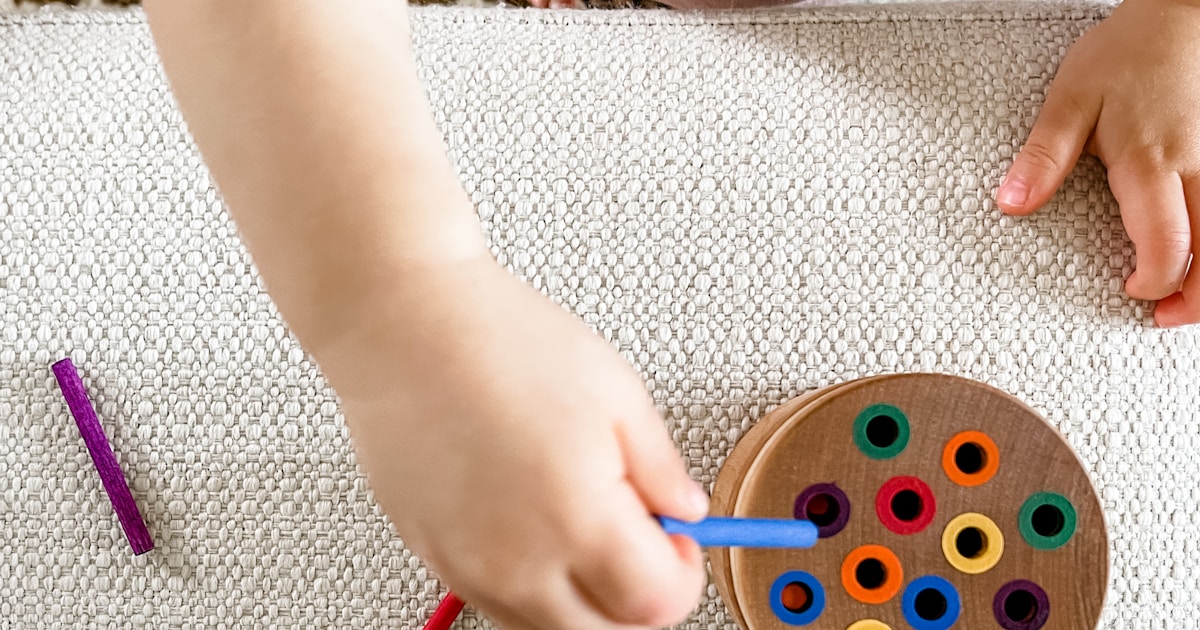
A good scripted bilingual activity includes: the vocabulary you’re targeting, the exact phrases to say written out (with a separate Pronunciation Companion to help you sound them out), a hands-on component that keeps your toddler engaged, and a time estimate of 10-15 minutes. You shouldn’t need to plan, research, or prep. Just open and go.
The Palabra Garden 12-Month Bilingual Curriculum was built around this exact principle. Every week has one scripted activity with all the phrases written out, designed for parents at any Spanish level. On weeks when you can do the activity plus your three daily moments, your child gets robust bilingual input. On weeks when you can only manage the three moments, the curriculum is right where you left it when you’re ready to pick it back up.
Managing Guilt and Expectations
Single parents carry enough guilt already. Please don’t add “not doing enough Spanish” to the list. Here’s the perspective that matters:
Any consistent Spanish exposure is better than none. A child who hears 15 minutes of Spanish every day from one loving parent develops phonological awareness, receptive vocabulary, cultural connection, and cognitive benefits that a monolingual child doesn’t get. They may not be perfectly balanced bilinguals by age 5, but they have a foundation that makes learning Spanish later dramatically easier.
Bilingualism is a marathon. There will be weeks when you barely manage “buenos dias” and “buenas noches.” There will be other weeks when you’re narrating the entire grocery trip in Spanish and feeling like a champion. Both weeks count. The weeks you show up imperfectly still build neural pathways. The only way to fail at bilingual parenting is to stop entirely.
Your child will not remember whether you used perfect grammar or covered every vocabulary theme on schedule. They will remember that their parent loved them in two languages. That’s the foundation everything else is built on.
A Weekly Plan for Single Parents
Here’s a realistic weekly rhythm that works for solo parents:
Every day (non-negotiable): Buenos dias greeting, Spanish at one mealtime, Spanish bedtime phrases. Total: 15 minutes.
Most days: Spanish music playing during at least one activity or car ride. Total: 20-30 minutes of passive exposure.
3-4 days per week: One Spanish show episode instead of English. Total: 20-25 minutes.
Once per week: One structured bilingual activity (10-15 minutes). A color hunt, a counting game, a bilingual book with labeling, a craft with Spanish vocabulary. Check out our 5 bilingual games for 2-year-olds for no-prep ideas.
That adds up to roughly 45-90 minutes of daily Spanish exposure depending on the day. Some of that is active (your conversation), some is passive (music and media). Together, it’s enough to build a real bilingual foundation.
You’re Enough
The bilingual parenting world can feel like it’s built for picture-perfect two-parent households with a Spanish-speaking abuela down the street. Your reality looks different, and that’s fine. What you’re giving your child — a second language, a cultural connection, and the cognitive benefits of bilingualism — is extraordinary, especially when you’re doing it alone.
Start with the three daily moments. Build from there when you can. Let music and media fill the gaps. And give yourself credit for every single Spanish word your child hears, because you’re the one making it happen.
If you want a week-by-week system that takes the planning off your plate, the Palabra Garden 12-Month Curriculum is designed to work for solo parents — short activities, full scripts, no prep required.
For a free starting point, download the bilingual starter kit — vocabulary cards, phrase guides, and activity ideas you can start using tonight.