Spanish Emerging Literacy — Building Pre-Reading Skills Before Kindergarten
By Lindsey Carleton, MA, CCC-SLP
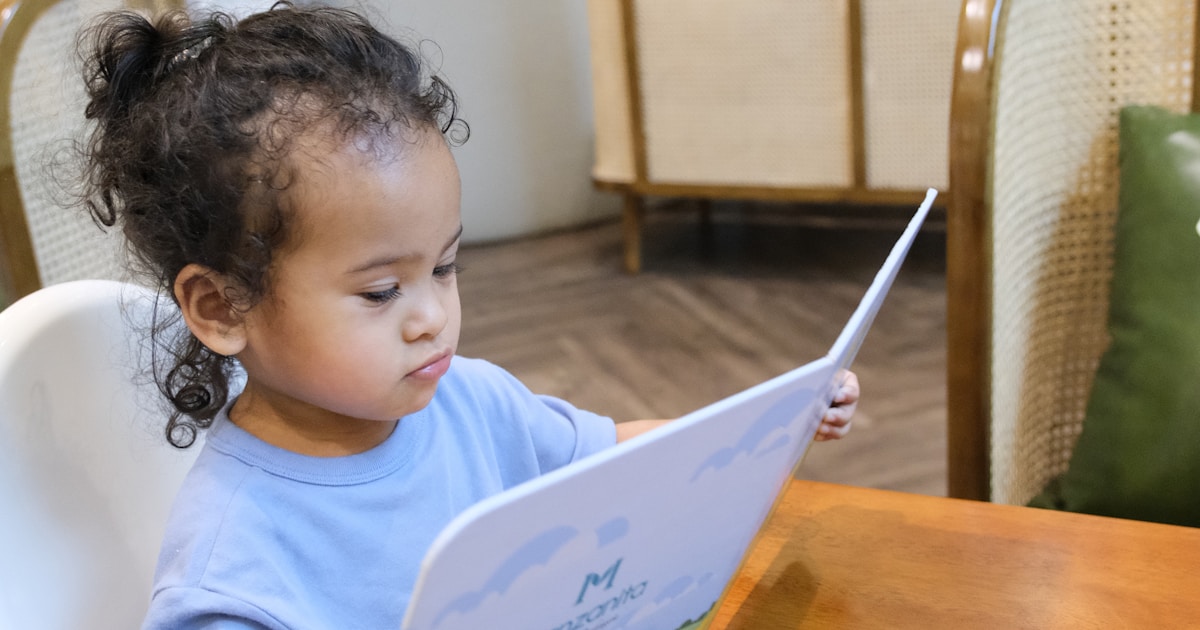
Your three-year-old climbs into your lap with a picture book and traces her finger along the letters on the cover. “What are those?” she asks. You point and say, “Esos son las letras. Son palabras. Aquí dice ‘el gato’.” She touches the page with the kind of reverence toddlers reserve for things that feel important and mysterious. In that moment, she’s not just learning to read — she’s beginning to understand that Spanish, like English, lives on the page and can be decoded.
For bilingual families, emerging literacy in Spanish often feels like uncharted territory. Most early literacy resources focus on English. And many parents worry: Should I focus on Spanish reading or wait until my child is stronger in spoken Spanish? Will learning to read in two languages confuse her? Does phonological awareness even work the same way in Spanish as it does in English?
The good news is that pre-reading skills in Spanish build on the same foundation as they do in English — but with some important differences in how Spanish sounds and letters work. Understanding those differences, and knowing how to layer literacy exposure into your daily routines without forcing formal instruction, can set your child up for bilingual reading success before she even reaches kindergarten.
Why Emerging Literacy Matters (And Why It’s Different From Learning to Read)
Emerging literacy is not the same as reading instruction. It’s the constellation of skills and knowledge that comes _before_a child can decode words on her own. It typically develops between ages 2 and 5 and includes:
Phonological awareness — understanding that words are made of sounds, that words can rhyme, and that syllables can be broken apart and manipulated. In Spanish, this sounds like noticing that “gato” (cat) and “pato” (duck) rhyme, or that the word “mesa” (table) has two syllables.
Print awareness — understanding that those squiggles on the page mean something, that we read from left to right (in Spanish, just as in English), and that letters are separate units that carry meaning.
Letter recognition and knowledge — being able to identify and name letters, and beginning to connect those letters to sounds.
Concept of word — understanding that the spaces between words on a page correspond to actual word boundaries when we speak.
Here’s the key: children who have strong emerging literacy skills in one language tend to transfer those skills to their second language. The neurological architecture for understanding how language works at the sound and symbol level is largely transferable. So Spanish emerging literacy doesn’t compete with English — it strengthens the whole system.
Phonological Awareness in Spanish: Sounds and Patterns
Spanish has some beautiful features for phonological awareness work. It’s highly phonetic (letters almost always make the same sounds), and it has a large inventory of rhyming words and consistent syllable patterns.
Spanish rhyming patterns are rich and fun. “Rimas” are a huge part of Spanish children’s language culture. You’ll find nursery rhymes, songs, and poems everywhere. The benefit: toddlers who hear lots of Spanish rhymes develop an intuitive feel for how Spanish sounds can match and diverge.
Common Spanish rhymes for toddlers:
-
“Gato” and “pato” (cat and duck)
-
“Luna” and “tuna” (moon and prickly pear — the cactus fruit; the fish is atún)
-
“Nene” and “diente” (baby and tooth)
-
“Casa” and “taza” (house and cup)
Sing rhyming songs together. Play “¿Qué rima con gato?” during car rides. When your child notices a rhyme, celebrate it enthusiastically.
Syllable awareness in Spanish is another goldmine. Spanish words have clear syllable boundaries and are typically pronounced with an even, steady syllable rhythm (unlike English’s uneven stress-timing). This makes syllable breaking especially natural in Spanish.
Try clapping syllables together: “mes-a”, “pa-to”, “A-bue-la”. As you clap, say the word slowly and let your child feel the rhythm. This becomes automatic for toddlers through just a few months of playful repetition.
Sound isolation and sound matching — the ability to pick out individual sounds within words — develops naturally through play. Ask questions like “¿Qué sonido hace la ‘p’?” (What sound does ‘p’ make?) or “¿Oyes la ‘ssss’ en ‘sol’?” (Do you hear the ‘ssss’ in ‘sun’?). Exaggerate the sounds and make faces that match them.
Print Awareness: Making the Written Spanish Visible
Young bilingual children often see more written English than written Spanish in their homes. Boards, screens, labels, and books tend to skew English. This asymmetry can make Spanish feel less “real” or “legitimate” to a child’s developing sense of written language.
Simple interventions shift that balance:
Label your home in Spanish and English. Write or print labels and stick them on familiar objects. “Puerta” on the door, “Ventana” on the window, “Refrigerador” on the fridge. Your child doesn’t need to “read” these yet — she’s simply absorbing the understanding that Spanish words go with objects and exist in written form.
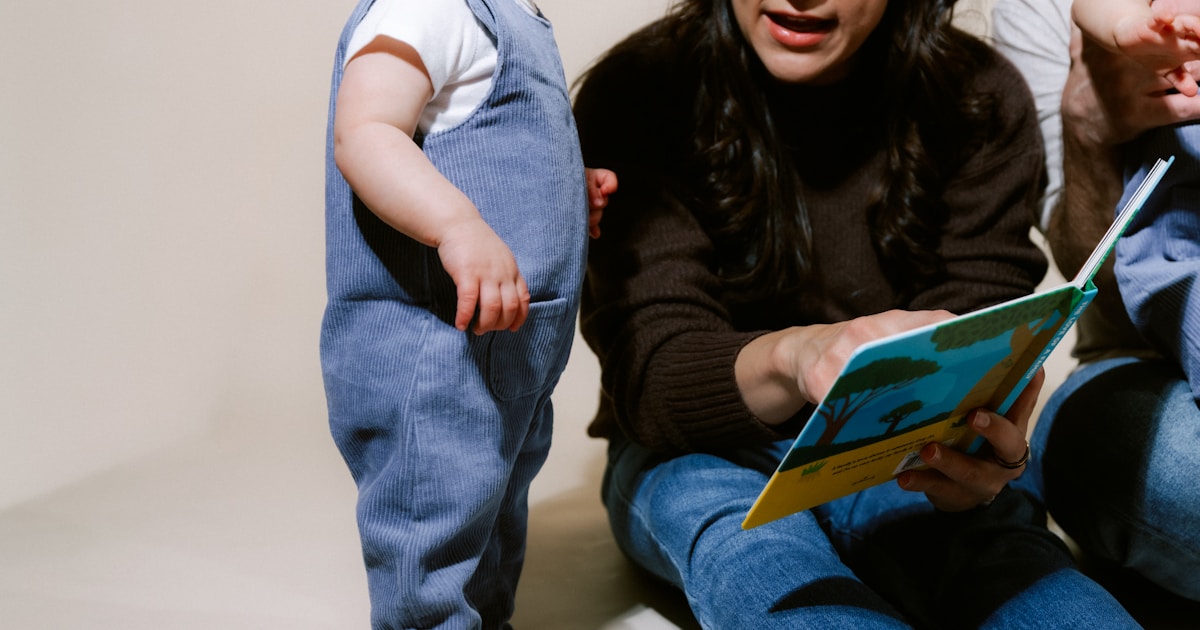
Read Spanish books regularly. Aim for daily shared reading of picture books in Spanish. Point to words as you read: “Aquí dice ‘el gato’.” Run your finger along the text. Let her turn the pages and control the pace. The goal is familiarity and comfort with Spanish print, not comprehension or decoding.
Leave Spanish books visible. Keep a basket of Spanish board books and picture books in a central location. Children who see books constantly scattered around internalize the idea that reading — in both languages — is a normal, valuable activity.
Write notes and messages in Spanish to your child. Leave little notes in her lunchbox: “Te amo, mamá” (I love you). Draw pictures with Spanish labels together. This makes writing feel connected to real communication, not just adult activity.
Encourage finger-point reading. When you read together, let her touch and point to the pictures. Occasionally point to a word and say it aloud, but don’t force it. This builds the connection between the visual symbol and the spoken word.
Letter Recognition and Letter-Sound Correspondence in Spanish
Spanish’s phonetic nature makes letter-sound correspondence straightforward. Most letters in Spanish have one consistent sound, which is very different from English (where “a” sounds different in “cat” vs. “cake” vs. “was”).
The basic Spanish alphabet:
-
A = “ah”
-
B = “beh” (most Spanish speakers)
-
C = “seh” or “theh” (depending on regional pronunciation)
-
CH = “cheh”
-
D = “deh”
-
E = “eh”
-
F = “efeh”
-
G = “heh” (before e/i) or “geh” (before a/o/u)
-
H = “ah-cheh”
-
I = “ee”
-
J = “hota”
-
K = “ka”
-
L = “eleh”
-
LL = “elyeh” or “yay”
-
M = “emeh”
-
N = “eneh”
-
Ñ = “enye”
-
O = “oh”
-
P = “peh”
-
Q = “koo”
-
R = “erreh”
-
RR = rolled r
-
S = “esseh”
-
T = “teh”
-
U = “oo”
-
V = “veh”
-
W = “doble veh”
-
X = “ekis”
-
Y = “ee-griega”
-
Z = “theta” (Spain) or “seta” (Americas)
You don’t need to teach the entire alphabet to young toddlers. Instead, focus on letters that appear in their own names and in high-frequency words they know.
Letter-sound play through names: If your daughter is named “María,” start with the letter M. “Este es la ‘emeh’. Hace el sonido mmmm. ¡Mmmmaría!” Make the sound together. Point to M in other contexts.
Letter-sound play through familiar words: Pick high-frequency words your child knows well: “mamá,” “papá,” “agua,” “pan,” “gato.” Take the first letter. Make the sound. Connect it back to the word.
Don’t correct letter names early. English speakers often learn “the letter bee” while Spanish speakers learn “la be.” This is not a problem. Your child will naturally adjust her terminology as she gets older and attends school. The sound-symbol connection is what matters now.
How Spanish Literacy Scaffolds English Literacy
One of the most encouraging research findings for bilingual families: children who learn pre-reading skills in Spanish tend to transfer those skills to English quickly and efficiently. The foundational understanding — that sounds map to symbols, that words are made of sounds, that books contain meaning — doesn’t need to be relearned.
In fact, children who build strong phonological awareness in Spanish transfer that skill directly to English reading, because they’ve developed explicit phonological awareness in both languages.
The transfer works this way:
A child who has practiced clapping syllables in Spanish can immediately clap syllables in English. A child who has noticed rhymes in Spanish can listen for rhymes in English. A child who understands the concept of the alphabet and letter-sound correspondence in Spanish doesn’t need to learn that concept again in English — she just needs to learn the different sounds that English letters make.
This is why emerging literacy in Spanish isn’t competing with English literacy — it’s building the cognitive architecture that English literacy will eventually rest on.
Building Play-Based Literacy Into Your Daily Routines
The best emerging literacy happens through play and daily routines, not through worksheets or flashcards. Here’s how to layer it into routines you’re already doing:
During bath time: Sing songs with rhyming verses in Spanish. Play water games with words that rhyme. “Pato” in the bath becomes a jumping-off point: “¿Qué rima con pato? ¡Gato! ¿Y con gato? ¡Zapato!”
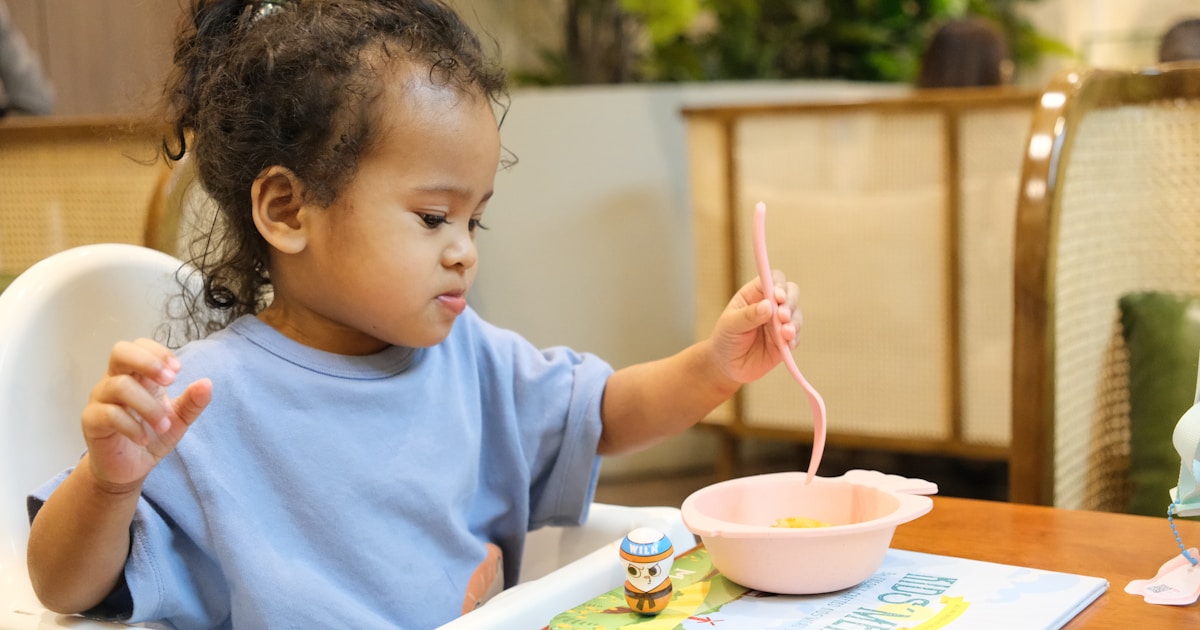
During meals: Label foods in Spanish as you eat. “Zanahorias naranjas. Son largas. ¿Ves la zeta al principio? Zzzzzanahoria.” Point to letters in cereal boxes or food labels.
During car rides: Play “Veo, veo” (I spy), but focus on initial sounds. “Veo algo que empieza con ppppp.” This is phonological awareness in action.
During outdoor time: Collect items and sort by first letter. “¿Qué empieza con árbol? ¿Agua? ¿Arena?” This works best with natural items (stones, leaves, twigs) that kids are already gathering.
During reading time: Choose books with rhythm, rhyme, and repetition. Spanish classics like “Cinco Lobitos,” “El Nene,” or “Los Pollitos Dicen” are perfect. Point to letters occasionally, but mostly focus on enjoying the story together.
During playtime: Write letters in sand, foam, or shaving cream. Trace letters with your finger. Let her form letters with her body. “Ahora somos la letra ‘T’. ¡Mírame!’”
Red Flags and When to Consult an SLP
Emerging literacy delays can sometimes indicate speech-language concerns, though most children follow a wide range of normal development. Watch for these patterns by age 4 or 5:
-
Shows no interest in books or stories in either language
-
Cannot identify any letter names after repeated exposure
-
Doesn’t notice or enjoy rhyming games
-
Cannot clap or identify syllables in familiar words
-
Shows very limited phonological awareness in either language
If you notice these patterns, consult a bilingual speech-language pathologist who can evaluate literacy development across both languages and rule out any underlying concerns.
Key Takeaway: Emerging Literacy Is Built Through Play, Not Worksheets
Spanish emerging literacy doesn’t require formal instruction or special programs. It develops naturally when children are immersed in spoken Spanish, exposed to Spanish print and stories, and invited to play with Spanish sounds and letters through games, songs, and daily routines.
The beauty of building pre-reading skills in Spanish before kindergarten is that you’re not teaching your child to read — you’re building the cognitive and linguistic foundation that reading will eventually rest on. And because Spanish is highly phonetic and has such a rich oral and literary tradition, this foundation builds quickly through everyday moments.
Your three-year-old pointing to letters on the book cover isn’t just learning literacy. She’s learning that her Spanish heritage, her family’s language, lives in written form too. That knowledge — that Spanish belongs in the world just as much as English does — is perhaps the deepest emerging literacy skill of all.
For Spanish alphabet cards, rhyming song lists, print-at-home bilingual book labels, and month-by-month literacy milestones from ages 2-5, download our free bilingual resources guide. And for a complete roadmap that weaves emerging literacy into every activity and routine across a full year, the Palabra Garden 12-Month Bilingual Curriculum includes literacy-building strategies for every age and language stage.
Related reading: First Words in Spanish — What to Expect and How to Encourage Them | Storytelling and Narrative Skills in Two Languages
About the Author
Hi, I’m Lindsey Carleton, MA, CCC-SLP, a bilingual speech-language pathologist with more than 11 years of experience and a fellow toddler mom. I created Palabra Garden to support families who want intentional, play-based learning at home.
Through my work as an SLP, I’ve seen how powerful early language, social-emotional development, and hands-on learning can be for toddlers and preschool-aged children. Palabra Garden brings those same principles into your home with bilingual activities, preschool curriculum ideas, and simple strategies that support growing minds.
I believe children learn best through connection, curiosity, and everyday moments of discovery.