Bilingual End-of-Summer Routines With Toddlers (That Don't Need a Reset)
By Lindsey Carleton, MA, CCC-SLP
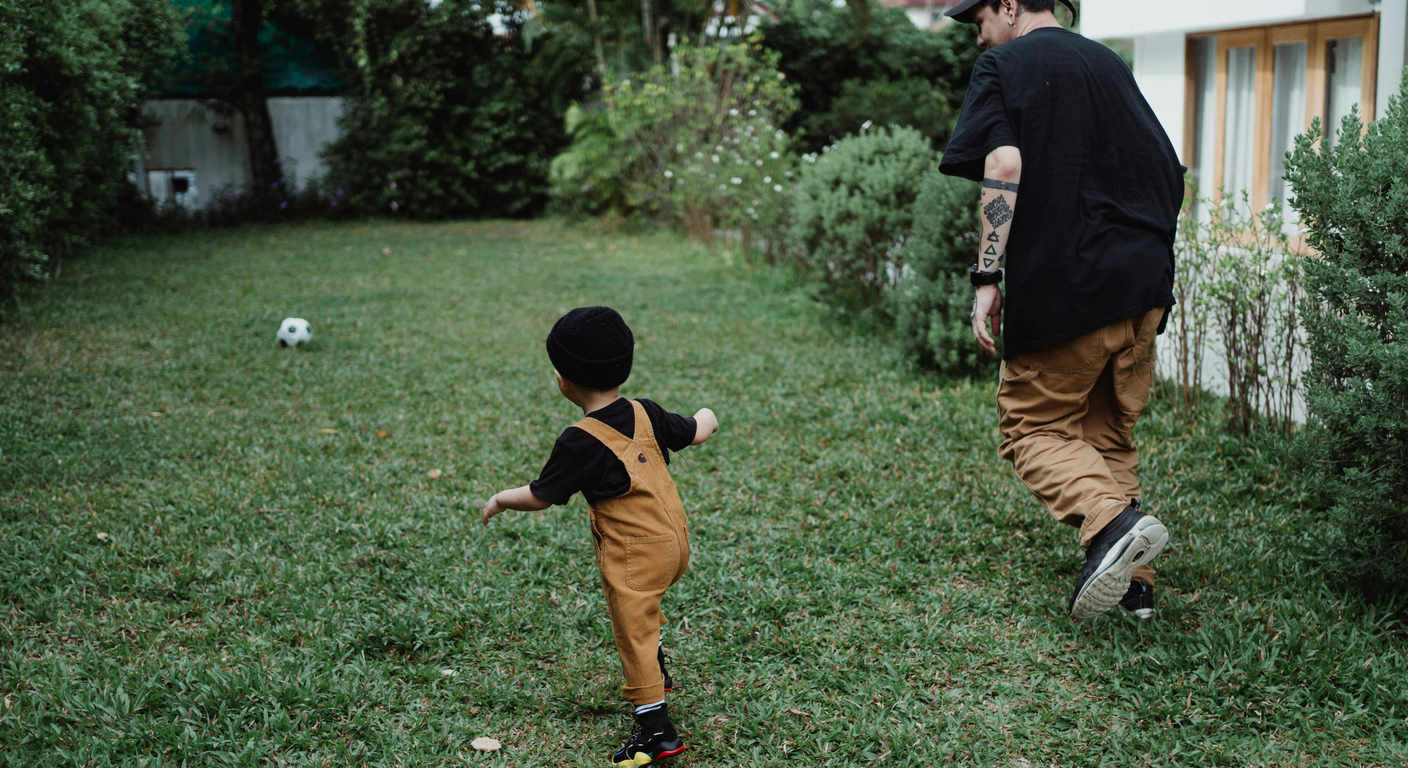
Late August is the strangest stretch of the bilingual year. Routines are technically still in place, but everyone knows the change is coming. The pool is open but emptier. Your toddler’s nap times are off. You’ve been doing the bilingual thing all summer, and honestly — you’re tired.
This is the part of the year where parents either coast into the fall (which is fine) or over-correct and try to ramp Spanish up as school starts (which usually backfires).
Here’s the honest middle path: keep what’s already working, drop what isn’t, and resist the urge to “reset” anything in the next two weeks. That’s it. The reset is built into September on its own.
Why August is hard
A few things stack up at once:
Your toddler is tired in a different way. Kids 2–5 burn through routine like a battery, and by mid-August the daily-summer-thing has lost some of its novelty. Crankiness goes up. Cooperation goes down. Your bilingual exposure plan — which probably depended on cooperation — bumps against that.
Your nervous system is also tired. The thing about bilingual parenting is that it’s cognitive labor. Every time you reach for a Spanish phrase instead of the easier English one, you’re spending a tiny amount of mental energy. Stack that across 90 summer days and the well is shallow by the third week of August.
The mental load of “what comes next” creeps in. Even if school isn’t starting yet, you’re thinking about supplies, schedules, the new caregiver, the daycare orientation. That mental load eats the bandwidth that was going to Spanish practice.
So if you’ve felt like the Spanish has gotten sparser in the past two weeks, you’re not failing. You’re at the end of a season. The right move isn’t more — it’s steady.
What to keep doing
Anchor on three moments you’ve already been using all summer and just hold the line on those. Don’t add. Don’t change. Just keep.
Most families have these three:
1. Mealtime words. If you’ve been saying plato, cuchara, agua, leche at meals for two months, keep doing it. The pattern is already wired in. You’re 80% of the way to your toddler saying these unprompted by September. Don’t introduce new mealtime vocabulary in late August. Just hold what you’ve got.
2. Outdoor play words. Tobogán (slide), columpio (swing), correr (run), saltar (jump). If you’ve been at parks or splash pads all summer, your kid’s already heard these hundreds of times. Keep using them — but skip the impulse to add five new words during the final park visits. Your toddler’s attention is thin right now.
3. Bedtime ritual. The bilingual bedtime sequence — baño, pijama, libro, beso, luz — works because it’s the most repeated moment in the day. Don’t change it. Don’t try to add a new Spanish lullaby this week. Don’t switch books. The familiarity is what makes it stick.
What to drop (without guilt)
Some things probably need to drop because you’re tired, and that’s the right call:
- Extra books you’ve been pulling out at random times. If you’ve been reading Spanish books at moments other than bedtime, and that’s been hard to keep up, just stop. Bedtime is enough.
- Spanish-language podcasts during car rides. If you’ve been playing them but not actually engaging, the input is low-value. English car-talk with you talking to your toddler is more valuable than passive Spanish audio they’re tuning out.
- The “I’ll narrate the whole day” attempt. Some parents try the full-immersion narration over summer (“now we’re going to the kitchen, vamos a la cocina”). It’s exhausting. If you’ve been doing it and it’s a strain, drop it. The mealtime + park + bedtime anchors carry you fine on their own.
The principle: stop anything that’s draining you, keep anything that’s already running on autopilot.
What NOT to do
A few traps to avoid:
Don’t pivot to “school readiness” Spanish. If your toddler is 2–4, school Spanish (bandera, alfabeto, escuela, mochila) isn’t urgent and probably feels artificial right now. There’s time for it when it’s age appropriate and the back-to-school energy is real.
Don’t reset the routines because they’re “stale.” If your bilingual mealtime routine feels boring to YOU, that’s because you’ve done it 90 times. To your toddler, it’s still working. Toddlers love repetition and consistency. Don’t burn the script.
Don’t compare to other families. August is the month where everyone posts their first-day-of-school photos and you wonder if you should be doing more. Other families’ bilingual practice doesn’t tell you anything useful about yours. Their fluency, their kid’s temperament, their schedule — none of it transfers.
What September is for
This is the important part: September is when the structured push happens. Back-to-school routines reset themselves automatically. Naps consolidate. Mornings get tighter. The natural shape of the day creates new bilingual opportunities — vamos al carro, no olvides la mochila, ¿cómo fue el día? — and those will fill in once school starts.
So if you’re currently feeling guilty that “we should have done more this summer,” that guilt is what’s tired talking. Your toddler heard hundreds of Spanish phrases in real-life context over the past 12 weeks. That input is sitting in their brain, sorting itself out, getting ready for the activation that comes when the new fall routine starts.
If you’re starting to think about a more structured approach for the school year ahead, our 12-Month Bilingual Curriculum is built for exactly this transition — a real fall routine with daily exposure, scripted phrases, and weekly themes that fit a back-to-school schedule. Currently $199 (regular $250) through Labor Day.