15 Spanish Phrases for Your Toddler's Morning Routine
By Lindsey Carleton, MA, CCC-SLP
Wake-Up Phrases (3 Phrases)
Start the day right. These phrases signal transition from sleep to awake, all in Spanish.
Buenos dias (Good morning) — Say this as your toddler wakes up. Make it warm and happy. Your child’s first language input of the day is Spanish. That matters.
Es hora de levantarse (It’s time to wake up) or Despiertate, es hora (Wake up, it’s time) — Use this as a gentle but firm wake-up call. Your toddler hears this phrase every morning and starts associating it with the transition from bed to awake.
Que bueno, ya despierte (Good, you’re awake now) — Celebrate that they’re up. Make waking up positive. Language learning happens best when it’s paired with positive emotion.
Getting Out of Bed (2 Phrases)
This is where toddlers often resist. Spanish doesn’t change the resistance, but it makes it more engaging and less of a power struggle.
Vamos a bajar de la cama (Let’s get down from the bed) — Frame it as something you’re doing together, not something being done to your child.
Baja con cuidado (Get down carefully) — Your toddler learns both the action and the safety language. Repetition of “cuidado” (careful) throughout the routine builds an important word naturally.
Getting Dressed (3 Phrases)
Dressing a toddler is a dance. These phrases make it more collaborative and more Spanish-rich.
Vamos a ponernos la ropa (Let’s put on our clothes) — Again, “we” language. Your toddler is a participant, not a passive recipient.
Levanta los brazos (Lift your arms) — Action word plus instruction. Your child hears the verb “levantar” (to lift) in context and follows the direction. They’re learning and obeying simultaneously.
Que bonito te ves (How nice you look) — After getting dressed, celebrate. Comment on how they look, in Spanish. This builds positive associations with getting dressed and reinforces appearance words.
Bathroom and Hygiene (4 Phrases)
Vamos al bano (Let’s go to the bathroom) — Transition phrase for a new part of the routine.
Vamos a lavarnos las manos (Let’s wash our hands) — Introduce this in Spanish and use it consistently. Your child learns “lavarse” (to wash) and “las manos” (hands) together in real context.
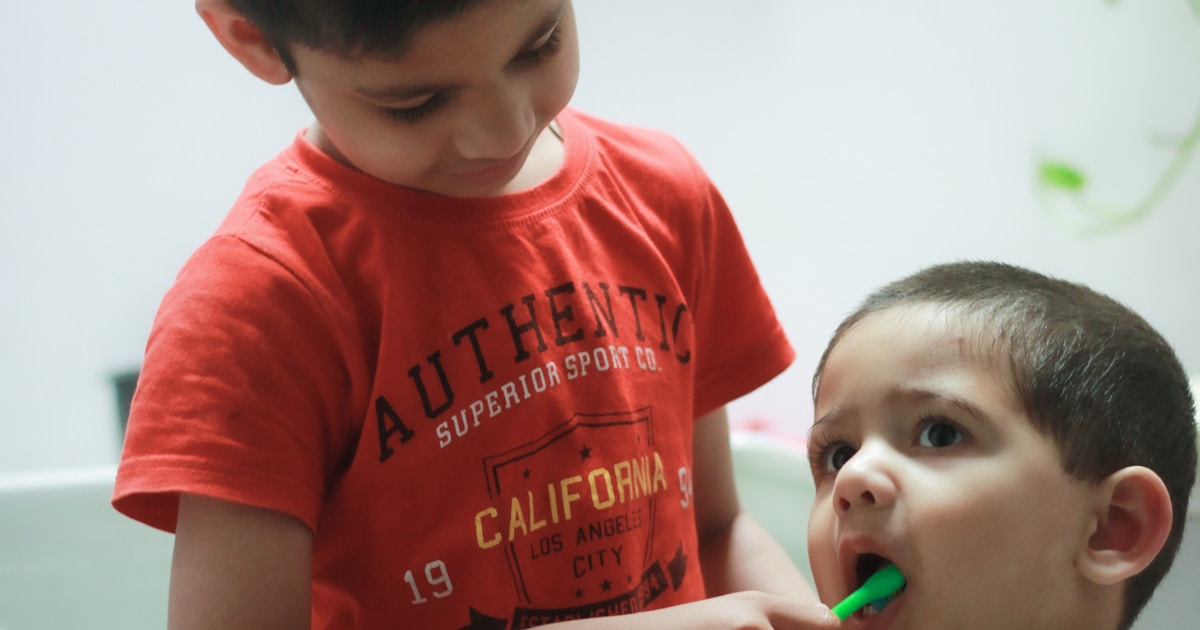
Ahora nos lavamos los dientes (Now we brush our teeth) — Another action word. “Lavarse los dientes” literally means “wash the teeth” and is used for brushing. Your child experiences the action and hears the phrase.
Abre la boca, grande (Open your mouth, big) — Practical phrase that gets used multiple times during teeth brushing. Your child learns the action verb “abrir” (to open) naturally.
Breakfast (2 Phrases)
Tengo hambre, vamos a desayunar (I’m hungry, let’s have breakfast) — “Desayunar” is breakfast as a verb. You’re hungry, so you’re going to breakfast. Language and reality align.
Come bien, lentamente (Eat well, slowly) — Speed and manner words paired with the action. Your child hears “comer” (to eat) and begins to understand that eating can happen at different speeds.
Preparing to Leave (2 Phrases)
Vamos a ponernos los zapatos (Let’s put on our shoes) — Shoes come next. Your child anticipates this phrase daily and knows what comes after it.
Vamos, ya es hora de salir (Let’s go, it’s time to leave) — Your final routine phrase. This signals the end of morning routine and transition to the car, daycare, or wherever the day takes you.
How to Use These Phrases Effectively
Here’s what matters: consistency. You need to use the same phrase, in the same order, at the same point in the routine every single morning. Not sometimes. Every day.
The reason? Your toddler’s brain learns through repetition and pattern recognition. When “Buenos dias” happens every morning at the exact moment they wake up, it becomes associated with waking up. When “Levanta los brazos” happens every time you’re dressing them, they start to anticipate it and maybe even follow the direction.
You don’t need to use all 15 phrases. If that feels overwhelming, start with five to seven. Pick the ones that happen at the biggest transitions (wake up, getting dressed, leaving) and the ones where you need your child to cooperate. Build from there.
Don’t rush. Speak slowly. Pause between phrases. Your toddler is processing language while simultaneously managing getting ready for the day. Give them time to absorb the words even if they don’t repeat them back to you right away.
Print and Tape It Somewhere You’ll See It
Here’s a practical hack: write out the 15 phrases in Spanish on a piece of paper, or print them, and tape them to your bathroom mirror or bedroom wall. As you go through your routine, glance at the list if you forget what comes next.
This accomplishes two things: it keeps you consistent (you’re not improvising which phrases to use), and it visually reminds you that Spanish is part of your morning. You see it every day, which reinforces your commitment to speaking Spanish even when you’re tired and rushed.
After a few weeks of consistent use, you won’t need the list. The phrases will be automatic. You’ll say “Buenos dias” without thinking about it because you’ve said it 50 times in the same context.
What If Your Toddler Doesn’t Respond in Spanish?
That’s completely normal. Toddlers go through a silent period where they understand way more than they produce. Your child might hear “Levanta los brazos” for three weeks before they repeat it back to you.
When they finally do say something back — even if it’s gibberish that vaguely sounds like the phrase — celebrate it softly. Don’t quiz them or ask them to repeat it. Just acknowledge it happily and move on with the routine.
The production (your child speaking Spanish) will come. The receptive understanding (your child following directions and comprehending what you’re saying) comes first. Trust the process.
Building Morning Routine Into Your Larger Bilingual Strategy
Morning routine is just one part of your daily Spanish exposure. For a complete picture of how to structure your entire day around Spanish windows, check out our guide to daily bilingual schedules. It shows you where morning routine fits and how to layer in other consistent Spanish moments throughout your day.
Also see our guide to bilingual bedtime routines. If morning is Spanish, making bedtime Spanish too creates two strong bookends for your bilingual day.
For more specific vocabulary and phrases for different parts of the day, download our free bilingual resources guide. It includes phrase lists for morning, bedtime, meals, and other daily routines.
Make Morning Routine Your Consistent Spanish Window
Here’s the beautiful thing about using morning routine for Spanish: you’re not adding extra work. You’re not carving out special teaching time. You’re just changing the language you use for something that already happens.
Every day you’ll say “Buenos dias.” Every day you’ll say “Levanta los brazos.” Every day you’ll say “Vamos a ponernos los zapatos.” That’s 365 repetitions of key Spanish phrases every year, delivered in context, with consistent emotional tone, tied to real daily actions.
That’s how you build a bilingual child. Not through flashcards. Not through special classes. Through consistent, contextual exposure woven into the routines you already live.
Your Complete Bilingual Morning Program
If you want to integrate morning routine Spanish into a complete, structured bilingual approach for your 2-5 year old, our 12-Month Bilingual Curriculum includes daily routine phrases for every time of day, a complete schedule for layering Spanish throughout your week, and activities that extend what you’re building in routine moments.
Get the curriculum and transform your mornings into your strongest Spanish window.
Start tomorrow morning. Wake up and say “Buenos dias” in Spanish. Use that phrase every single morning. That’s how this works. One phrase, one morning, one day at a time, building toward a truly bilingual child.